Tuesday, May 27, 2014

Dear William H McRaven:

I commend to your attention the work of Dr. Eugene J Ratner, eg The Lancet p106 Jan14 1978 describing the treatment of the cause of causalgia. Patient Mrs J Edward Spike Jr whose personal physician was Mark Altschule of Harvard. Ratner worked for the US Veterans Administration. If your underlings are valuable and become damaged with causalgia, Ratner's work for the US is unique and valuable. Sadly life is cheap and people are fungible?
You may contact Ratner at 646-701-2512.

Life Lessons From Navy SEAL Training

Adm. William H. McRaven, commander of U.S. Special Operations Command, gave a commencement address last week that graduates, and their parents, won't soon forget.

May 23, 2014 6:40 p.m. ET
The following is adapted from the commencement address by Adm. William H. McRaven, ninth commander of U.S. Special Operations Command, at the University of Texas at Austin on May 17.
The University of Texas slogan is "What starts here changes the world."
I have to admit—I kinda like it.
"What starts here changes the world."
Tonight there are almost 8,000 students graduating from UT.
That great paragon of analytical rigor, Ask.Com, says that the average American will meet 10,000 people in their lifetime.
That's a lot of folks. But if every one of you changed the lives of just 10 people, and each one of those folks changed the lives of another 10 people—just 10—then in five generations, 125 years, the class of 2014 will have changed the lives of 800 million people.
Eight-hundred million people—think of it: over twice the population of the United States. Go one more generation and you can change the entire population of the world—eight billion people.
If you think it's hard to change the lives of 10 people, change their lives forever, you're wrong.
I saw it happen every day in Iraq and Afghanistan.
A young Army officer makes a decision to go left instead of right down a road in Baghdad and the 10 soldiers with him are saved from close-in ambush.
In Kandahar province, Afghanistan, a noncommissioned officer from the Female Engagement Team senses something isn't right and directs the infantry platoon away from a 500-pound IED, saving the lives of a dozen soldiers.
A Navy SEAL instructor and his class during 'Hell Week' in Coronado, Calif. Getty Images
But, if you think about it, not only were these soldiers saved by the decisions of one person, but their children yet unborn were also saved. And their children's children were saved.
Generations were saved by one decision, by one person.
But changing the world can happen anywhere and anyone can do it.
So, what starts here can indeed change the world, but the question is: What will the world look like after you change it?
Well, I am confident that it will look much, much better, but if you will humor this old sailor for just a moment, I have a few suggestions that may help you on your way to a better a world.
And while these lessons were learned during my time in the military, I can assure you that it matters not whether you ever served a day in uniform. It matters not your gender, your ethnic or religious background, your orientation, or your social status. Our struggles in this world are similar and the lessons to overcome those struggles and to move forward—changing ourselves and the world around us—will apply equally to all.
I have been a Navy SEAL for 36 years. But it all began when I left UT for Basic SEAL training in Coronado, Calif.
Basic SEAL training is six months of long, torturous runs in the soft sand, midnight swims in the cold water off San Diego, obstacle courses, unending calisthenics, days without sleep and always being cold, wet and miserable.
It is six months of being constantly harassed by professionally trained warriors who seek to find the weak of mind and body and eliminate them from ever becoming a Navy SEAL.
But, the training also seeks to find those students who can lead in an environment of constant stress, chaos, failure and hardships. To me basic SEAL training was a lifetime of challenges crammed into six months.
So, here are lessons I learned from basic SEAL training that hopefully will be of value to you as you move forward in life.
1. Every morning in basic SEAL training, my instructors, who at the time were all Vietnam veterans, would show up in my barracks room and the first thing they would inspect was your bed. If you did it right, the corners would be square, the covers pulled tight, the pillow centered just under the headboard and the extra blanket folded neatly at the foot of the rack—that's Navy talk for bed.
It was a simple task, mundane at best. But every morning we were required to make our bed to perfection. It seemed a little ridiculous at the time, particularly in light of the fact that were aspiring to be real warriors, tough battle hardened SEALs, but the wisdom of this simple act has been proven to me many times over.
If you make your bed every morning you will have accomplished the first task of the day. It will give you a small sense of pride and it will encourage you to do another task and another and another. By the end of the day, that one task completed will have turned into many tasks completed. Making your bed will also reinforce the fact that little things in life matter.
If you can't do the little things right, you will never do the big things right.
And if by chance you have a miserable day, you will come home to a bed that is made—that you made—and a made bed gives you encouragement that tomorrow will be better.
If you want to change the world, start off by making your bed.
2. During SEAL training the students are broken down into boat crews. Each crew is seven students—three on each side of a small rubber boat and one coxswain to help guide the dingy. Every day, your boat crew forms up on the beach and is instructed to get through the surfzone and paddle several miles down the coast.
In the winter, the surf off San Diego can get to be 8 to 10 feet high and it is exceedingly difficult to paddle through the plunging surf unless everyone digs in. Every paddle must be synchronized to the stroke count of the coxswain. Everyone must exert equal effort or the boat will turn against the wave and be unceremoniously tossed back on the beach.
For the boat to make it to its destination, everyone must paddle.
You can't change the world alone—you will need some help—and to truly get from your starting point to your destination takes friends, colleagues, the goodwill of strangers and a strong coxswain to guide them.
If you want to change the world, find someone to help you paddle.
3. Over a few weeks of difficult training my SEAL class, which started with 150 men, was down to just 42. There were now six boat crews of seven men each.
I was in the boat with the tall guys, but the best boat crew we had was made up of the little guys—the munchkin crew we called them. No one was over about 5-foot-5.
The munchkin boat crew had one American Indian, one African-American, one Polish-American, one Greek-American, one Italian-American and two tough kids from the Midwest.
They out-paddled, out-ran and out-swam all the other boat crews.
The big men in the other boat crews would always make good-natured fun of the tiny little flippers the munchkins put on their tiny little feet prior to every swim. But somehow these little guys, from every corner of the nation and the world, always had the last laugh—swimming faster than everyone and reaching the shore long before the rest of us.
SEAL training was a great equalizer. Nothing mattered but your will to succeed. Not your color, not your ethnic background, not your education and not your social status.
If you want to change the world, measure people by the size of their heart, not the size of their flippers.
4. Several times a week, the instructors would line up the class and do a uniform inspection. It was exceptionally thorough. Your hat had to be perfectly starched, your uniform immaculately pressed and your belt buckle shiny and void of any smudges.
But it seemed that no matter how much effort you put into starching your hat, or pressing your uniform or polishing your belt buckle, it just wasn't good enough. The instructors would find "something" wrong.
For failing the uniform inspection, the student had to run, fully clothed, into the surfzone and then, wet from head to toe, roll around on the beach until every part of your body was covered with sand. The effect was known as a "sugar cookie." You stayed in that uniform the rest of the day—cold, wet and sandy.
There were many students who just couldn't accept the fact that all their effort was in vain. That no matter how hard they tried to get the uniform right, it was unappreciated.
Those students didn't make it through training. Those students didn't understand the purpose of the drill. You were never going to succeed. You were never going to have a perfect uniform.
Sometimes, no matter how well you prepare or how well you perform, you still end up as a sugar cookie. It's just the way life is sometimes.
If you want to change the world, get over being a sugar cookie and keep moving forward.
5. Every day during training you were challenged with multiple physical events. Long runs, long swims, obstacle courses, hours of calisthenics—something designed to test your mettle.
Every event had standards, times that you had to meet. If you failed to meet those standards, your name was posted on a list and at the end of the day those on the list were invited to a "circus."
A circus was two hours of additional calisthenics designed to wear you down, to break your spirit, to force you to quit. No one wanted a circus. A circus meant that for that day you didn't measure up. A circus meant more fatigue, and more fatigue meant that the following day would be more difficult—and more circuses were likely.
But at some time during SEAL training, everyone—everyone—made the circus list. Yet an interesting thing happened to those who were constantly on the list. Over time those students, who did two hours of extra calisthenics, got stronger and stronger. The pain of the circuses built inner strength—built physical resiliency.
Life is filled with circuses. You will fail. You will likely fail often. It will be painful. It will be discouraging. At times it will test you to your very core.
But if you want to change the world, don't be afraid of the circuses.
6. At least twice a week, the trainees were required to run the obstacle course. The obstacle course contained 25 obstacles including a 10-foot-high wall, a 30-foot cargo net and a barbed-wire crawl, to name a few.
But the most challenging obstacle was the slide for life. It had a three-level, 30-foot tower at one end and a one-level tower at the other. In between was a 200-foot-long rope.
You had to climb the three-tiered tower and, once at the top, you grabbed the rope, swung underneath the rope and pulled yourself hand over hand until you got to the other end.
The record for the obstacle course had stood for years when my class began training in 1977. The record seemed unbeatable until one day a student decided to go down the slide for life—head-first. Instead of swinging his body underneath the rope and inching his way down, he bravely mounted the top of the rope and thrust himself forward.
It was a dangerous move—seemingly foolish, and fraught with risk. Failure could mean injury and being dropped from the training. Without hesitation, the student slid down the rope, perilously fast. Instead of several minutes, it only took him half that time and by the end of the course he had broken the record.
If you want to change the world sometimes you have to slide down the obstacle head-first.
7. During the land-warfare phase of training, the students are flown out to San Clemente Island near San Diego. The waters off San Clemente are a breeding ground for great white sharks. To pass SEAL training, there are a series of long swims that must be completed. One is the night swim.
Before the swim, the instructors joyfully brief the trainees on all the species of sharks that inhabit the waters off San Clemente. The instructors assure you, however, that no student has ever been eaten by a shark—at least not recently.
But, you are also taught that if a shark begins to circle your position, stand your ground. Do not swim away. Do not act afraid. And if the shark, hungry for a midnight snack, darts towards you, then summon up all your strength and punch him in the snout and he will turn and swim away.
There are a lot of sharks in the world. If you hope to complete the swim you will have to deal with them.
So, if you want to change the world, don't back down from the sharks.
8. As Navy SEALs, one of our jobs is to conduct underwater attacks against enemy shipping. We practiced this technique extensively during basic training. The ship-attack mission is where a pair of SEAL divers is dropped off outside an enemy harbor and then swims well over 2 miles—underwater—using nothing but a depth gauge and a compass to get to their target.
During the entire swim, even well below the surface, there is some light that comes through. It is comforting to know that there is open water above you. But as you approach the ship, which is tied to a pier, the light begins to fade. The steel structure of the ship blocks the moonlight, it blocks the surrounding street lamps, it blocks all ambient light.
To be successful in your mission, you have to swim under the ship and find the keel—the centerline and the deepest part of the ship. This is your objective. But the keel is also the darkest part of the ship, where you cannot see your hand in front of your face, where the noise from the ship's machinery is deafening and where it is easy to get disoriented and fail.
Every SEAL knows that under the keel, at the darkest moment of the mission, is the time when you must be calm, composed—when all your tactical skills, your physical power and all your inner strength must be brought to bear.
If you want to change the world, you must be your very best in the darkest moment.
9. The ninth week of SEAL training is referred to as Hell Week. It is six days of no sleep, constant physical and mental harassment and one special day at the Mud Flats. The Mud Flats are an area between San Diego and Tijuana where the water runs off and creates the Tijuana slues—a swampy patch of terrain where the mud will engulf you.
It is on Wednesday of Hell Week that you paddle down to the mud flats and spend the next 15 hours trying to survive the freezing-cold mud, the howling wind and the incessant pressure from the instructors to quit.
As the sun began to set that Wednesday evening, my training class, having committed some "egregious infraction of the rules" was ordered into the mud. The mud consumed each man till there was nothing visible but our heads. The instructors told us we could leave the mud if only five men would quit—just five men and we could get out of the oppressive cold.
Looking around the mud flat, it was apparent that some students were about to give up. It was still over eight hours till the sun came up—eight more hours of bone-chilling cold. The chattering teeth and shivering moans of the trainees were so loud it was hard to hear anything. And then, one voice began to echo through the night—one voice raised in song.
The song was terribly out of tune, but sung with great enthusiasm. One voice became two, and two became three, and before long everyone in the class was singing.
We knew that if one man could rise above the misery then others could as well. The instructors threatened us with more time in the mud if we kept up the singing—but the singing persisted. And somehow, the mud seemed a little warmer, the wind a little tamer and the dawn not so far away.
If I have learned anything in my time traveling the world, it is the power of hope. The power of one person—Washington, Lincoln, King, Mandela and even a young girl from Pakistan named Malala—can change the world by giving people hope.
So, if you want to change the world, start singing when you're up to your neck in mud.
10. Finally, in SEAL training there is a bell. A brass bell that hangs in the center of the compound for all the students to see.
All you have to do to quit is ring the bell. Ring the bell and you no longer have to wake up at 5 o'clock. Ring the bell and you no longer have to do the freezing cold swims. Ring the bell and you no longer have to do the runs, the obstacle course, the PT—and you no longer have to endure the hardships of training. Just ring the bell.
If you want to change the world don't ever, ever ring the bell.
To the graduating class of 2014, you are moments away from graduating. Moments away from beginning your journey through life. Moments away from starting to change the world—for the better.
It will not be easy.
But start each day with a task completed. Find someone to help you through life. Respect everyone. Know that life is not fair and that you will fail often, but if you take some risks, step up when the times are toughest, face down the bullies, lift up the downtrodden and never, ever give up—if you do these things, then the next generation and the generations that follow will live in a world far better than the one we have today. And what started here will indeed have changed the world, for the better.
Thank you very much. Hook 'em horns.

Monday, May 26, 2014

Easter, a NY Case of Mistaken


Identity. Ditto for Palm Sunday. What do you expect from lawyers?

N.Y. / Region

Assembly Speaker Finds Fall Guy: Another Sheldon Silver


Photo

Photographs of Sheldon E. Silver in his family's home in Brooklyn. Mr. Silver, a Minneapolis-born lawyer, died in 2001. Credit Kirsten Luce for The New York Times


Continue reading the main story Share This Page
Continue reading the main story
To Sheldon Silver, the powerful speaker of the New York State Assembly, it was nothing but a simple case of mistaken identity.
In the 1970s, Mr. Silver, a Democrat, worked with a new nonprofit group, the United Jewish Council of the East Side, to block low-income housing on a large, barren site in his district on the Lower East Side of Manhattan, the beginning of a decades-long effort that was described in a recent article in The New York Times.
Those actions, Mr. Silver insisted after the article was published, were actually taken by another man: Sheldon E. Silver, a Minneapolis-born lawyer who moved to Brooklyn in the early 1970s and died in 2001.
“I was forever confused with this guy,” Mr. Silver said at a breakfast he hosted on Thursday at the state Democratic Party convention. “Even after he left there, I got phone calls from people who I knew.”
Mr. Silver’s spokesman, Michael Whyland, said in an email that the other Mr. Silver “was a counsel to U.J.C. in the ‘70s and early ‘80s.”

Photo

The Assembly speaker, Sheldon Silver, center, at the New York Democratic Party convention on Thursday. Credit Christopher Gregory for The New York Times

“You can understand why he would be upset,” Mr. Whyland said in a subsequent telephone call.
But the documents cited in the article make clear that Speaker Silver — a master at distancing himself from controversies and scandals in his chamber — was in fact the person who pressed New York City officials to allow an international mall to be built on the site, instead of low-income housing. The letter quoted was written on his official stationery from the Assembly. And minutes of the meetings with city officials clearly identify Mr. Silver as the lawmaker, not the similarly named lawyer from Brooklyn.
After Mr. Silver’s office saw those documents, it dropped its request for a correction on which Mr. Silver pressed for the mall in the 1970s.
But the office held on to one claim of mistaken identity: The “Sheldon Silver Esq.” identified as counsel to United Jewish Council on the group’s letterhead from all those years was not the assemblyman, but the other Mr. Silver. As evidence, the office produced two one-sentence letters from 1973 to the Internal Revenue Service from the council signed by Mr. Sheldon E. Silver.
Enter Shoshana Silver, the widow of the deceased lawyer.
Ms. Silver, now 66, said her husband did briefly hold a job with the newly formed United Jewish Council right about the time he was admitted to practice law in New York, in June 1973. He was let go by the group by early 1974.
If anything written on behalf of the council had Mr. Silver’s name on it after 1974, it had nothing to do with her husband, she said.
“It was only six or nine months, a very short period of time,” Ms. Silver said. “They needed him because they were just starting up, but once they got up and going, I guess they didn’t need him anymore.”
She recalls it clearly, she said, because they had been recently married when he lost the job, and the United Jewish Council gave him a set of Mishnah Berurah, or Jewish law books, as a parting gift.
“Once he left, he had no ties with them whatsoever,” she said.
Speaker Silver said Mr. Silver’s widow was mistaken. “He didn’t work there for a few months; he worked there, for, you know, several years,” the speaker said, adding for emphasis that he did not serve as the group’s counsel.
The council’s comptroller, Norma Klein, confirmed that the speaker’s office asked if there were any records that would show that Sheldon E. Silver had worked there. She said she found nothing other than the two letters from 1973.

Continue reading the main story

A Documented History

Mayoral archives, court files and business records document Assemblyman Silver’s long involvement with the United Jewish Council. Though many show the name “Sheldon Silver Esq.,” the assemblyman says they actually refer to Sheldon E. Silver, a Brooklyn lawyer who died in 2001.

Throughout the late 1970s, United Jewish Council’s stationery lists the counsel as Sheldon Silver, Esq. — exactly how Speaker Silver, who has no middle name, listed his name in his official registration with the state court. The other Mr. Silver is registered as “Sheldon E. Silver.”
Had the lawyer from Minneapolis been the group’s counsel through the early 1980s, he would have made acquaintances with some of Speaker Silver’s closest and longest allies. The board members listed on United Jewish Council’s stationery during those years included Speaker Silver’s rabbi, Yitzchok Singer of Bialystoker Synagogue; the board president was Harold Jacob, one of the speaker’s closest associates (his wife, Esther, has been an employee of Mr. Silver’s Assembly office since 1978). Together, Mr. Silver, Mr. Jacob and Rabbi Singer were the co-founders of a nonprofit housing partnership between United Jewish Council and Bialystoker to build apartments for seniors.
Judy Rapfogel, the assemblyman’s chief of staff and an employee of his office since 1977, also served on the group’s board. Her husband, William E. Rapfogel, who was a longtime associate of Mr. Silver’s and worked with him to fight housing plans for the empty swath of land, pleaded guilty in April to stealing over $1 million from the Metropolitan Council on Jewish Poverty.
Among other examples of the assemblyman’s ties to the United Jewish Council, one lawsuit stands out.
In 1979, the council and about a dozen families sued a local synagogue to block its planned sale to a Buddhist temple; Mr. Silver was their lawyer. He filed an affidavit arguing that United Jewish Council should have standing to sue in the case because it represented “the entire organized Jewish community of the Lower East Side of Manhattan.” A judge did not agree.
As the case reached its conclusion seven years later, Mr. Silver wrote to the court that he had met with the aggrieved worshipers at United Jewish Council headquarters to discuss their wishes. And he left little doubt which Mr. Silver he was.
“I am also the assemblyman for the district in which the synagogue is located and have a keen interest in having the plaintiff congregants continue to use their synagogue in the future,” he wrote.
Mr. Silver’s office continues to say he was never counsel or lawyer to United Jewish Council.
“It is not surprising that he worked with this major community group in his district many times over 40 years in office,” Mr. Whyland said. “In fact, it would be more surprising if they had never worked together.”
Sheldon E. Silver’s family finds it a little humorous that his three decades as a work-a-day lawyer in Brooklyn somehow muddled the résumé of the powerful Assembly leader.
That other Mr. Silver was the son of nonobservant Jews. In 1961, he was admitted to practice law in Minnesota. He moved to Crown Heights, Brooklyn, to pursue a life with the Chabad-Lubavitch Hasidic movement.
He built a small law practice, as a public defender and in smaller-scale commercial litigation, and rarely, if ever, worked outside Brooklyn, said his son Moshe K. Silver, now a lawyer himself.
Shoshana Silver, who works as a special-education teacher, chuckled when told the politician insisted her husband had met with officials and a prominent developer in the mid-1970s to push for the construction of a large mall. “I guess he doesn’t want to take responsibility for those things,” she said.


Sheldon Silver does not care to know that Easter Sunday and Palm Sunday are not observed by all on the same Sunday in all years. See NY  Const. Art. 1, Sec. 3

Andrew Cuomo tells the Pope that Nassau OTB will only close on Roman Catholic Palm Sunday and Roman Catholic Easter Sunday. Bettors that don't like it can simply go to hell.

HI-
Thanks for the help. The item’s below. I’d be happy to mail you a copy, if you give me a mailing address.

Claude Solnik
(631) 913-4244
Long Island Business News
2150 Smithtown Ave.
Ronkonkoma, NY 11779-7348 

Home > LI Confidential > Stop scratching on holidays

Stop scratching on holidays
Published: June 1, 2012


Off Track Betting in New York State has been racing into a crisis called shrinking revenue. Some people have spitballed a solution: Don’t close on holidays.
New York State Racing Law bars racing on Christmas, Easter and Palm Sunday, and the state has ruled OTBs can’t handle action on those days, even though they could easily broadcast races from out of state.
“You should be able to bet whenever you want,” said Jackson Leeds, a Nassau OTB employee who makes an occasional bet. He added some irrefutable logic: “How is the business going to make money if you’re not open to take people’s bets?”
Elias Tsekerides, president of the Federation of Hellenic Societies of Greater New York, said OTB is open on Greek Orthodox Easter and Palm Sunday.
“I don’t want discrimination,” Tsekerides said. “They close for the Catholics, but open for the Greek Orthodox? It’s either open for all or not open.”
OTB officials have said they lose millions by closing on Palm Sunday alone, with tracks such as Gulfstream, Santa Anita, Turf Paradise and Hawthorne running.
One option: OTBs could just stay open and face the consequences. New York City OTB did just that back in 2003. The handle was about $1.5 million – and OTB was fined $5,000.
Easy money.

Pope Calls for End to 'Unacceptable' Israeli-Palestinian Conflict


By Deborah Ball 
BETHLEHEM, West Bank-- Pope Francis threw his weight behind a two-state solution to the Israeli-Palestinian conflict during a visit Sunday, calling the situation there "increasingly unacceptable" and inviting leaders to the Vatican for prayer.
On the second day of his three-day visit to the region, the pope used his meeting with Palestinian President Mahmoud Abbas to strongly affirm the Vatican's support for an independent Palestine living in peace with Israel.
The call from the popular pope marks his clearest enunciation of his stance on the Israeli-Palestinian conflict of his young papacy, raising the pressure on both sides to resume talks that broke down recently. The pope's comments went beyond his general call for a "just solution" during his visit Saturday in Jordan.
"The time has come for everyone to find the courage...to forge a peace that rests on the acknowledgment by all of the right of two states to exist and to live in peace and security within internationally recognized borders," the 77-year-old pontiff said during his meeting with Palestinian authorities soon after his arrival in Bethlehem.
He called for an "end to this situation that has becoming increasingly unacceptable."
The pope offered an invitation to Palestinian President Mahmoud Abbas and Israeli President Shimon Peres to the Vatican for a peace initiative. "I offer my home in the Vatican as a place for this encounter of prayer," said the pope. A Vatican spokesman later said that the invitation isn't a political one.
In an extraordinary gesture, the pope stopped his open-topped popemobile at the Israeli separation wall that divides Jerusalem from Bethlehem on his way to Manger Square, the site believed to be the birthplace of Jesus, where he celebrated Mass. Security forces scrambled to hold back the small crowd that followed him to the wall.
The pope flew from Amman in Jordan directly to Bethlehem, making him the first pope to arrive in the West Bank directly, rather than passing through Israel--a symbolic boost to Palestinian leaders. The Vatican praised a U.N. resolution that granted the Palestinian Authority observer state status in 2012, a development opposed by the U.S. and Israel.
On Sunday afternoon, Pope Francis will travel to Tel Aviv, where he will meet with Peres and Israeli Prime Minister Benjamin Netanyahu, and is expected to press further his call for a two-state solution. The Pope will meet again with the Israeli leaders in Jerusalem on Monday, the last day of his visit.
Before his departure, the pope described his trip-- the fourth papal visit to the Middle East--as "purely religious," but leaders on both sides of the Arab-Israeli conflict have jockeyed for his support. Every detail of the pope's travel plans and schedule of meetings has been scrutinized for political significance.
Pope Francis will also meet children from two Palestinian refugee camps, gratifying Palestinian officials looking to highlight their issues with Israel to a pontiff who has expressed great concern for migrants and displaced peoples.
The Bethlehem visit highlights the plight of Christians in the Middle East and sets the stage for the pontiff's call for ecumenical unity. The city was festooned with yellow-and-white Vatican flags to mark the visit, while an enthusiastic crowd gathered in the square for the pope's Mass.
Bethlehem once boasted a large Christian community, but is now two-thirds Muslim, making it a case study of the difficulties Christians are facing in the Middle East. The pope's trip to the region is aimed in part at encouraging Christian communities, which are under pressure to flee in many Middle Eastern countries. Hundreds of thousands of Christians have fled after their churches were targeted, and a number of priests have been abducted or killed.
In comments at the meeting with Mr. Abbas, the pope called for respect for religious freedom, saying that "Christians desire to continue (their) role as full citizens" in the region.
Fouad Twal, the Latin Patriarch of Jerusalem, has expressed fears that the Holy Land could become a "spiritual Disneyland" if it loses a permanent Christian presence and becomes purely a destination for religious tourism.
The pope will finish his visit Sunday with a meeting with Orthodox Christian leaders in an effort to unify and strengthen Christian communities in the region. In Jerusalem later, he will hold a prayer service together with Patriarch Bartholomew in the Basilica of the Holy Sepulcher, the site believed to be Jesus' burial site.
The patriarch, who sits in Istanbul, is considered the first among equals in the various Orthodox churches and acts as the spokesman in dialogue with other Christian faiths and other religions. The pair will meet to commemorate the 50th anniversary of the meeting between Pope Paul VI and Bartholomew's predecessor, Patriarch Athenagoras, that marked a new rapprochement between the Orthodox and Catholic churches.
The ceremony will include leaders from the five Christian communities that have a historic presence at the major Christian sites in Jerusalem. The choice of the Holy Sepulcher is a deliberate one. While the church itself is under joint control of Greek Orthodox, Armenian and Catholic officials, their relations are notoriously fraught.
The pontiff's Middle East trip is his second abroad since his election last year. On Monday, he will visit the Western Wall, meet with Israeli leaders, and go to Holocaust memorial Yad Vashem in Jerusalem. He will finish the tour with a mass at the Cenacle, the room believed to be the site of Jesus' Last Supper with his disciples.
Write to Deborah Ball at deborah.ball@wsj.com
By Deborah Ball and Nicholas Casey 
BETHLEHEM, West Bank--In the wake of stalled negotiations between the Israelis and Palestinians, Pope Francis announced a peace initiative of his own on Sunday, asking the presidents of the two governments to come to Rome to speak together and pray with him.
The offer was part of a flurry of activity marking the pope's three-day visit to the region, where he used a meeting with Palestinian President Mahmoud Abbas to strongly affirm the Vatican's support for an independent Palestine and raise the pressure on both sides to resume talks that collapsed in acrimony following nine months of U.S. mediation.
The offer could signal at least a small opening for dialogue. Israeli President Shimon Peres accepted the invitation and Palestinian government officials also said that the offer to meet was welcome. Hanna Amira, a member of the Palestine Liberation Organization's executive committee, said the meeting would take place on June 6.
"I offer my home in the Vatican as a place for this encounter of prayer, " the 77-year-old pontiff said in his invitation.
Vatican Spokesman Federico Lombardi described the offer as an attempt to "build peace within the perspective of prayer," saying that Pope Francis had the "moral authority" to push the issue.
It wasn't clear just how far such an initiative could go. While Mr. Peres has a long history in past peace initiatives and supports two states, his post as president is mainly symbolic and ends next month. Already, other leaders are jockeying to take his position.
"Honestly I'm not sure what happens from here," said Mustafa Barghouti, a prominent Palestinian lawmaker in the West Bank.
In his clearest enunciation of his stance on the Israeli-Palestinian conflict of his young papacy, the pope threw his weight behind a two-state solution, calling the situation there "increasingly unacceptable." The comments went beyond his general call for a "just solution" during his visit Saturday in Jordan.
"The time has come for everyone to find the courage...to forge a peace that rests on the acknowledgment by all of the right of two states to exist and to live in peace and security within internationally recognized borders," the pontiff said during his meeting with Palestinian authorities soon after his arrival in Bethlehem.
He called for an "end to this situation that has becoming increasingly unacceptable."
In another extraordinary gesture, the pope stopped his open-topped popemobile at the Israeli separation wall that divides Jerusalem from Bethlehem on his way to Manger Square, the site believed to be the birthplace of Jesus, where he celebrated Mass.
Security forces scrambled to hold back the small crowd that followed him to the wall, where he stopped to pray in silence for several moments. Palestinians saw the move as a strong signal.
"I think it was courageous of him to stop there," said Ghassan Khatib, a former Palestinian peace negotiator.
Dimitri Diliani, a Christian Palestinian lawmaker, said the gesture indicated that Pope Francis has more willingness to "express his opinions and to speak his mind." He said Pope Francis could differ from John Paul II and Benedict XVI, who he said were "too diplomatic" in addressing the conflict.
A spokesman for Israeli Prime Minister Benjamin Netanyahu wouldn't comment.
The pope flew from Amman in Jordan directly to Bethlehem, making him the first pope to arrive in the West Bank directly, rather than passing through Israel--a symbolic boost to Palestinian leaders.
The Vatican has long supported two states in the region. However the Catholic Church has little clout among Israelis and Palestinians and faces many challenges in bringing the sides to the table.
Peace talks collapsed last April after months of mediation by U.S. Secretary of State John Kerry. Israel has withdrawn from negotiations and issued economic sanctions against the Palestinian government.
The Palestine Liberation Organization announced last month it would form a unity government with Hamas, which both Israel and the U.S. consider to be a terrorist organization. While the P.L.O. says the new government will only include technocrats, Israel has said it will not negotiate with any government that includes Hamas, which doesn't recognize Israel.
On Sunday afternoon, Pope Francis will travel to Tel Aviv, where he will meet with Mr. Peres and Mr. Netanyahu, and is expected to press further his call for a two-state solution. The Pope will meet again with the Israeli leaders in Jerusalem on Monday, the last day of his visit.
Before his departure to the Middle East, the pope described his trip-- the fourth papal visit to the region--as "purely religious," but leaders on both sides of the Arab-Israeli conflict have jockeyed for his support. Every detail of the pope's travel plans and schedule of meetings has been scrutinized for political significance.
Pope Francis will also meet children from two Palestinian refugee camps, gratifying Palestinian officials looking to highlight their issues with Israel to a pontiff who has expressed great concern for migrants and displaced peoples.
The Bethlehem visit also highlights the plight of Christians in the Middle East and sets the stage for the pontiff's call for ecumenical unity. The city was festooned with yellow-and-white Vatican flags to mark the visit, while an enthusiastic crowd gathered in the square for the pope's Mass.
Bethlehem once boasted a large Christian community, but is now two-thirds Muslim, making it a case study of the difficulties Christians are facing in the Middle East. The pope's trip to the region is aimed in part at encouraging Christian communities, which are under pressure to flee in many Middle Eastern countries.
Joshua Mitnick contributed to this article.
Write to Deborah Ball at deborah.ball@wsj.com and Nicholas Casey at nicholas.casey@wsj.com


U.S. News & World Report Releases Best Nursing Homes 2014

The most complete information on America's nursing facilities.

SHARE
Washington, D.C. – Feb. 26, 2014 – U.S. News & World Report, publisher of Best Hospitals and Best Children’s Hospitals, today released its Best Nursing Homes 2014, highlighting the top nursing homes in every state and nearly 100 major metropolitan areas. The ratings cover almost 16,000 nursing homes nationwide and are freely available at http://www.usnews.com/best-nursing-homes.
Now in its sixth year, U.S. News’ Best Nursing Homes is designed to help the millions of Americans who will spend time in a nursing home in 2014. According to Centers for Medicare and Medicaid Services, about 60 percent of individuals over 65 will require some type of long-term care services during their lifetime and over 40 percent will receive care in a nursing home for some period.
Best Nursing Homes provides data and information on care, safety, health inspections, staffing and more for nearly every nursing facility in the U.S. A searchable database lets users find highly rated nursing homes by distance as well as by location. Each facility’s profile displays health and fire violations, performance in important clinical categories and how much time nursing staff spends with residents.
The ratings are just a starting point. Best Nursing Homes offers advice on how to pay for care, spot warning signs of bad care, understand how the federal Affordable Care Act affects senior care, and otherwise manage the emotional and financial challenges of dealing with an aging loved one.
To create Best Nursing Homes 2014, U.S. News drew on data from Nursing Home Compare, a program run by the Centers for Medicare & Medicaid Services, the federal agency that sets and enforces standards for nursing homes. U.S. News awarded the “Best Nursing Homes” designation to facilities that recently earned the agency’s highest overall rating of five stars.
In the new ratings, the share of nursing homes with the top five-star rating has reached 25 percent, up sharply from about 19 percent last year. California has the most five-star-nursing homes, followed by Florida, Ohio, Texas and Pennsylvania.
“The rising number of five-star homes is encouraging,” says Avery Comarow, U.S. News health rankings editor. “It speaks to care that is steadily becoming more skilled and compassionate.”
“Managing the cost and care of an elderly loved one is a challenge millions of Americans face each year,” says Brian Kelly, editor and chief content officer of U.S. News. “We hope our Best Nursing Homes ratings, advice, and tools help them make this important decision.”
Media contacts: Lucy Lyons, llyons@usnews.com and Health-PR@usnews.com
About U.S. News & World Report
U.S. News & World Report is a multi-platform publisher of news and analysis, which includes the digital-only “U.S. News Weekly” magazine, www.usnews.com and www.rankingsandreviews.com. Focusing on Health, Personal Finance, Education, Travel, Cars and Public Service/Opinion, U.S. News has earned a reputation as the leading provider of service news and information that improves the quality of life of its readers. U.S. News & World Report’s signature franchise includes its News You Can Use® brand of journalism and its annual “Best” series of consumer Web guides and publications that include rankings of colleges, graduate schools, hospitals, mutual funds, health plans and more.

Thursday, May 22, 2014

if the leader is a lawyer

then healthcare is dead
shoot BCG and treat your autoimmune disease(s) and give yourself an increased chance against TB

healthcare according to Hiram Maxim is simply lead to the head, safe, cheap, effective and guaranteed

is it any wonder automatic weapons never go out of style or demand? 

http://nhsreality.wordpress.com/2014/03/19/drug-resistant-tuberculosis-threatens-us-all-bring-back-the-bcg/

BCG vaccination , originally introduced in 1953, and later stopped as the incidence of the disease became so low, is a really good preventative. However, it is not 100%, and especially where prolonged respiratory exposure occurs, anyone can catch TB. It is avoiding cramped living conditions, and affluence which is also needed. Consumption (as it used to be called) is a prolonged downhill course of untreated TB, and it is happening more now. It is time to bring back BCG in schools, stop rationing it out, and while government delays parents might think to pay for it privately …

Refinements needed

Dear Drug Policy Alliance:
1.  Please include the following in all references to MS
    a)
Ristori G, Romano S, Cannoni S, Visconti A, Tinelli E, Mendozzi L, Cecconi P, Lanzillo R, Quarantelli M, Buttinelli C, Gasperini C, Frontoni M, Coarelli G, Caputo D, Bresciamorra V, Vanacore N, Pozzilli C, Salvetti M.
Neurology. 2014 Jan 7;82(1):41-8. doi: 10.1212/01.wnl.0000438216.93319.ab. Epub 2013 Dec 4.
PMID:
24306002
[PubMed - indexed for MEDLINE]
  b)
Ann Neurol. 1995 Aug;38(2):147-54.

Reduced expression of peptide-loaded HLA class I molecules on multiple sclerosis lymphocytes.

Abstract

Lymphocytes from patients with HLA class II-linked autoimmune diseases such as type I diabetes, systemic lupus erythematosus, rheumatoid arthritis, and Graves' have recently been shown to have a decrease in the expression of self-peptide-filled HLA class I antigens on the surface of peripheral lymphocytes. The human demyelinating diseases of multiple sclerosis in some cases are also associated with the presence of certain HLA class II genes, which may in turn be linked to genes in the class II region that control class I expression. Hence, we studied fresh peripheral blood mononuclear cells (PBMCs) and newly produced Epstein-Barr virus (EBV)-transformed cell lines from multiple sclerosis patients for the class I defect. Unseparated PBMCs, as well as T cells, B cells, and macrophages from multiple sclerosis patients had a decrease in the amount of conformationally correct peptide-filled HLA class I molecules on the cell surface compared with matched controls detectable by flow cytometry. To demonstrate the independence of this defect from exogenous serum factors, newly produced EBV-transformed cell lines from B cells of patients with multiple sclerosis maintained the defect. In addition, DR2 +/+, +/-, and -/- EBV-transformed B cells from these patients similarly demonstrated the self-antigen presentation defect. Analysis of a set of discordant multiple sclerosis twins revealed the class I defect was exclusively found on the affected twin lymphocytes, suggesting a role of this class I complex in disease expression. These data indicate that multiple sclerosis patients have abnormal presentation of self-antigens.(ABSTRACT TRUNCATED AT 250 WORDS)


I would like to make a You Tube Video demonstrating the safety and efficacy of BCG for plaque psoriasis.
I have already observed that with one vaccination dose there is clearing.  As an added benefit BCG confers protection against TB and multi-drug resistant TB.

3.  See eg Ratner EJ The Lancet p.106 Jan. 14, 1978. You will find some cases of facial neuralgias concomittant with MS.  I suggest that Ratner and his work have much to say about MS but for a short term/quick fix, Shoot BCG

Note BCG is safe for pregnant women.
See eg

>>> Rigshospitalet  <news@meltwaterpress.com> 9/3/2012 9:27 AM >>>


Press release


3rd of September 2012


Tuberculosis vaccine - a new remedy for allergies and asthma in children?
M Can a vaccine against tuberculosis help combat asthma and eczema in Danish children early in life? This will now be examined in a comprehensive Danish research study.  
From September 2012, thousands of Danish pregnant women will receive an invitation to allow their newborns to take part in a sensational trial.
The tuberculosis vaccine was removed from the vaccine program in Denmark during the 1980s, however new research indicates that the vaccine can improve the health of children.
Research carried out in developing countries shows that the health of infants who have been given the tuberculosis vaccine (BCG/Calmette) at birth is improved and the babies have a better survival rate than those who have not been given the vaccine. The vaccine also seems to have a preventive effect against asthma and atopic dermatitis.
Results are so striking that they cannot be explained by the fact that the children did not catch tuberculosis. Therefore, researchers assess the vaccine to have a general positive effect on the immune system, which means that children are less sick, and have less atopic dermatitis, asthma and allergies.
Whether this positive effect also can benefit Danish children will now be examined in a large Danish research project headed by Lone Graff Stensballe, Paediatrician from the Department of Paediatrics and Adolescent Medicine at Rigshospitalet.
The research project will run for three years, starting in September 2012, where 4,300 infants and their parents will be followed through interviews, examinations, and, for 300 of the children, blood tests as well. The project will comprise five PhD courses and a research collaboration with obstetricians, paediatricians, midwives, nurses and laboratory technicians from the three hospitals taking part in the project.
“We are very excited about this unique opportunity to improve the health of Danish children early in life,” says Lone Graff Stensballe. “Unfortunately, we have seen large increases in admissions, consumption of medicines, asthma, eczema and allergies among Danish children. We hope to curb these increases with the new research project.”
The research project will be carried out at Rigshospitalet in collaboration with Hvidovre Hospital, Kolding Sygehus Lillebælt and the new Centre for Vitamins and Vaccines at SSI (Statens Serum Institut).

For further information and interviews, please contact:
Lone Graff Stensballe
Head of Research
Paediatrician, Department of Paediatrics and Adolescent Medicine, Rigshospitalet, Denmark
Telephone: +45 6022 8092    E-mail: lone.graff.stensballe@rh.regionh.dk


Rigshospitalet - a part of Copenhagen University Hospital


Rigshospitalet – a part of Copenhagen University Hospital – is Denmark'sleading hospital for patients needing highly specialized treatment. Rigshospitalet serves all of Denmark, Greenland and the Faroe Islands within almost all specialties and sub-specialties of medicine and surgery.


Afmelding: Ønsker du ikke længere at få tilsendt e-mails fra Rigshospitalet via Meltwater Press, venligst klik: [her]. Afmelding kan tage op til 2 arbejdsdage.

Hvis du ønsker at kontakte Meltwater Press, kan du kontakte Meltwater Press på:
Meltwater Group Christian IX's Gade 10, 2. 1111 København K

--------------------------------------------------------
The information transmitted in this email and any of its attachments is intended only for the person or entity to which it is addressed and may contain information concerning Cablevision and/or its affiliates and subsidiaries that is proprietary, privileged, confidential and/or subject to copyright. Any review, retransmission, dissemination or other use of, or taking of any action in reliance upon, this information by persons or entities other than the intended recipient(s) is prohibited and may be unlawful. If you received this in error, please contact the sender immediately and delete and destroy the communication and all of the attachments you have received and all copies thereof.


Please help see that BCG is available to all who seek same in NY


California
DPA Office of Legal Affairs
Berkeley, CA 
918 Parker St., Bldg. A21
Berkeley, CA 94710
legalaffairs "at" drugpolicy . org
District of Columbia
DPA Office of National Affairs
925 15th St. NW, 2nd Floor
Washington, DC 20005
202.683.2030 ph
202.216.0803 fx
dc "at" drugpolicy . org
Los Angeles, CA
3470 Wilshire Blvd., Suite 618
Los Angeles, CA 90010
213.382.6400 ph
213.382.6425 fx
la "at" drugpolicy . org
New Jersey
16 W. Front St., Suite 101A
Trenton, NJ 08608
609.396.8613 ph
609.396.9478 fx
nj "at" drugpolicy . org
San Francisco, CA
131 10th St.
San Francisco, CA 94103
415.241.9800 ph
415.901.4018  fx
sf "at" drugpolicy . org
New Mexico
343 East Alameda
Santa Fe, NM 87501-2229
505.983.3277 ph
505.983.3278 fx
nm "at" drugpolicy.org
Colorado
1839 York St., #1
Denver, CO 80206
303.388.8950 ph
303.388.8859 fx
co "at" drugpolicy . org


New York
Headquarters
131 West 33rd St., 15th Floor
New York, NY 10001
212.613.8020 ph
212.613.8021 fx
nyc "at" drugpolicy . org
 

  Fill in the following information:

Name:


City/State/ZIP:


* Drug Policy Alliance is committed to protecting your privacy and will never share your email address.
New York, NY
Headquarters
70 West 36th Street, 16th Floor
New York, NY 10018
(212) 613-8020 ph
(212) 613-8021 fx
nyc "at" drugpolicy . org

Nassau OTB does not


pay enough and/or requires too much WORK more than de minimis WORK or simply appearing?

Nassau OTB could make more money if it was open 365 days of the year but the rights secured by NY Const. Art 1, Sec. 3 are de minimis and even among Christians, the most highly paid lobbyist wins?


NIFA approves contract for Albany lobbyist

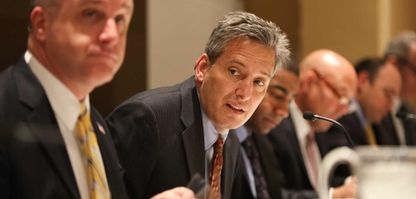
NIFA Chairman Jon Kaiman looks on during the
NIFA Chairman Jon Kaiman looks on during the Nassau Interim Finance Authority meeting at the Long Island Marriott in Uniondale on Friday, May 2, 2014. (Credit: Barry Sloan)
Nassau’s financial control board, with a new chairman and majority appointed by Gov. Andrew M. Cuomo, has approved a $60,000 contract with Albany lobbyist Robert Bishop after the former NIFA board twice rejected hiring Bishop as unnecessary.
Jon Kaiman, Nassau Interim Finance Authority chairman, said that when he served as North Hempstead Town supervisor, he found lobbyists provide a valuable service. NIFA member John Buran said, “Given the amount of money that flows between the county and the state, this is a de minimis expense.”

But NIFA member Chris Wright [FORMER NASSAU OTB DIRECTOR], who voted against the Bishop contract last week and in the past, said, “I don’t think it’s possible for the county to get more favorable treatment from Albany than it’s currently getting" -- a reference to the close relationship between Democrat Cuomo and GOP County Executive Edward Mangano.


    Hempstead Town hires D'Amato firm for consulting, lobbying

    Hempstead Town has hired the consulting firm headed by former Republican Sen. Alfonse D'Amato for a one-year $150,000 contract to advise the town on winning federal, state and local disaster relief funding.
    The town board voted 6-0 on Tuesday to retain Manhattan-based Park Strategies LLC as a consultant for $12,500 a month, starting June 1.
    The town did not seek bids. It was not required to because the consultant contract is considered a personal services agreement, town spokesman Michael Deery said. "These types of consultants' agreement are eligible for reimbursement under FEMA as well," he said. "They [Park Strategies] have unique expertise with dealing with governmental agencies with reimbursement of expenses, in this case for disaster response and recovery."

    DATA: 2012 payroll | Employees taking early retirement
    MORE: Latest Hempstead news | Free community newsletters
    SOCIAL: @AishaAlMuslim | @NewsdayTowns | Google+
    SEARCH: 2012 Hempstead payroll

    Under the contract, Park Strategies would provide advice on obtaining disaster relief funding for damage from Tropical Storm Irene in 2011 and superstorm Sandy in 2012. The firm would also provide lobbying services for gaining government funding and arrange meetings with key individuals and agencies.
    "We will work with all appropriate authorities to seek those funds to which the Town is entitled under various state and federal programs," Dana Sanneman, executive assistant to D'Amato, said in a statement.
    The town may cancel the contract for any reason with 30 days written notice, according to the agreement.
    "Town officials should inform residents of any and all efforts the town makes to obtain disaster relief funding, along with any costs," frequent town critic Felix Procacci, of Franklin Square, said in an email. "I feel this is especially important in this case since the company being hired is run by a former high ranking politician and a former Hempstead Town Supervisor."
    D'Amato, senator from 1981 to 1999, established Park Strategies in 1999. A Newsday review of lobbying records in February showed the firm was paid $5.9 million for lobbying in 2013 -- a 60 percent increase from the year before and a 150 percent jump from 2011.


    Report: Lobbying earnings up for LI firms

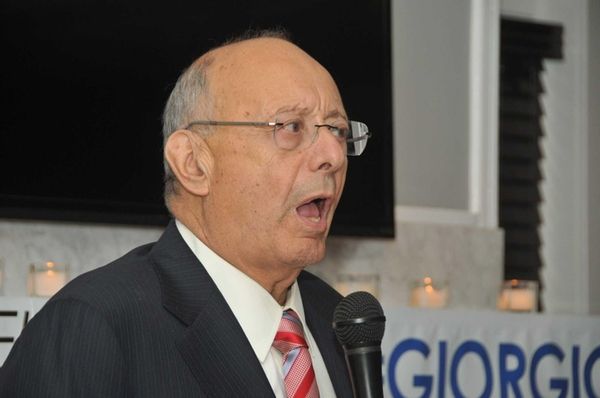
    Former New York Sen. Alfonse D'Amato endorses Dina
    Former New York Sen. Alfonse D'Amato endorses Dina DeGiorgio as she announces her candidacy for supervisor for the Town of North Hempstead at a fundraising event in Port Washington. (April 18, 2013) (Credit: Danielle Finkelstein)
    ALBANY - Former Sen. Alfonse D'Amato's firm, Park Strategies, climbed into the ranks of the top 10 lobbying businesses in New York in 2012 in terms of the number of clients.
    After absorbing an Albany-based firm increased its clients from 46 in 2011 to 79 last year, Park Strategies rose to ninth place in total clients among lobbying firms registered in New York, according the state's annual lobbying report.
    The company's revenue was $3.7 million in 2012 -- eighth-most in the state -- slightly up from $3.3 million the previous year.
    All told, more than 20 Long Island lobbyists or those with deep local ties earned about $8.9 million in 2012, about a 3 percent annual increase, a review of records shows.
    Statewide, spending on lobbying totaled $205 million last year, a 7 percent decrease from the year before, according to the Joint Commission on Public Ethics. A significant drop in advertising spending by lobbying groups drove the decline, while fees paid to lobbyists increased 5 percent from the year before.
    "It's certainly not a shrinking business. It seems there are new names every year," said Arthur "Jerry" Kremer, a former state assemblyman who heads Empire Government Strategies, the fifth-largest Island-affiliated lobbying firm with $469,000 in lobbying fees in 2012.
    Kremer said the amount spent on lobbying is just a fraction of the business for many firms, which typically provide an array of consulting services. "We're busier than ever," he said.
    Manhattan-based Park Strategies, which has an office in Uniondale, was even more active.
    The D'Amato firm last year absorbed Capitol Public Strategies, an Albany-based firm headed by former Pataki administration officials. The merger not only grew the company's client list but also increased its State Capitol and upstate presence, other lobbyists and watchdogs said.

    Merger's 'heavy footprint'
    "The merger of these major players brings a dynamic and heavy footprint to the Albany lobbying community, a classic case of where the sum will be greater than their individual parts," said Dick Dadey of Citizens Union, which monitors lobbying and other issues.
    The firm's biggest client was Veolia Transportation Services, an Illinois firm that now runs Nassau County's bus service. Veolia, long a D'Amato client, paid Park $270,000 last year.
    Other major clients included Gateway Casino Resorts ($180,000), the company working with the Shinnecock Nation to develop a Long Island casino; Extended Home Care, a long-term health care company ($150,000); LaGuardia Airport ($105,000); and Nassau Off-Track Betting Corp. ($96,000). (Nassau OTB regularly retains other lobbyists, too; it spent $180,000 on lobbying in 2012.)
    Park also represented Nassau Health Care Corp. ($65,000) during a year it unsuccessfully tried to get state legislative approval to refinance its debt, and SRC ($105,000), a Syracuse-based company that sought state aid to redevelop a Rochester mall.
    In an emailed statement, D'Amato said he was proud of the company's "continued success."
    "Businesses on Long Island and across the state have recognized that our team at Park Strategies has tremendous professional experience in a wide range of interests -- ranging from insurance, tax policy, and banking, to energy, health care, and local government," D'Amato said.

    LI firms, by the numbers
    No other firm with Island ties topped $1 million. Meyer, Suozzi, English and Klein earned $918,125, the first time in recent years it didn't record at least $1 million. Its largest client was the Shinnecock Nation ($101,000).
    Robert A. Ungar Associates, a Garden City firm that primarily represents unions and contractors, ranked No. 3 among local firms with $792,468, according to the report, which was released March 28. Ungar reported about $640,000 in lobby billings in 2011.
    The company with Long Island ties that spent the most on lobbying was Cablevision. It spent $935,328, a slight decrease from the two previous years. Cablevision is the parent company of Newsday. According to its filings, Cablevision lobbied on a range of laws including labor, telecommunication, Internet privacy and franchising.
    Glenwood Management Corp. ranked No. 2 with $798,000, up from $704,000 the year before. The New Hyde Park-based real-estate company, headed by Leonard Litwin, lobbied on land-use, environmental regulations, and housing and rental laws, among other things. Litwin, through dozens of Glenwood subsidiaries, has contributed $500,000 to Gov. Andrew M. Cuomo since 2010, according to the New York Public Interest Research Group.
    Statewide, no group spent more than the Committee to Save New York. The deep-pocketed business group allied with Cuomo spent $4.2 million in 2012 to promote the Democrat's agenda. This was the second consecutive year the group led all lobby spending.
    Exxon Mobil ranked No. 2 with $2.106 million, followed by Major League Soccer LLC, which spent $2.102 million advocating for a new stadium in Flushing, Queens.


    HI-
    Thanks for the help. The item’s below. I’d be happy to mail you a copy, if you give me a mailing address.

    Claude Solnik
    (631) 913-4244
    Long Island Business News
    2150 Smithtown Ave.
    Ronkonkoma, NY 11779-7348 

    Home > LI Confidential > Stop scratching on holidays

    Stop scratching on holidays
    Published: June 1, 2012


    Off Track Betting in New York State has been racing into a crisis called shrinking revenue. Some people have spitballed a solution: Don’t close on holidays.
    New York State Racing Law bars racing on Christmas, Easter and Palm Sunday, and the state has ruled OTBs can’t handle action on those days, even though they could easily broadcast races from out of state.
    “You should be able to bet whenever you want,” said Jackson Leeds, a Nassau OTB employee who makes an occasional bet. He added some irrefutable logic: “How is the business going to make money if you’re not open to take people’s bets?”
    Elias Tsekerides, president of the Federation of Hellenic Societies of Greater New York, said OTB is open on Greek Orthodox Easter and Palm Sunday.
    “I don’t want discrimination,” Tsekerides said. “They close for the Catholics, but open for the Greek Orthodox? It’s either open for all or not open.”
    OTB officials have said they lose millions by closing on Palm Sunday alone, with tracks such as Gulfstream, Santa Anita, Turf Paradise and Hawthorne running.
    One option: OTBs could just stay open and face the consequences. New York City OTB did just that back in 2003. The handle was about $1.5 million – and OTB was fined $5,000.
    Easy money.