Friday, June 20, 2014

analyze and debate this

"Hello, my name is Cecelia [B] Ratner and I want to check the balance on my checking account #....... My daughter [Susan or Merle] is also on the line. The last four digits of social security #: XXXX. The entire Social Security Number XXX-XX-XXXX. Date of Birth 9/4/1925."


1. Is Cecelia B Ratner "competent."
    Cecelia B Ratner is presumed competent until a court determines she is incompetent? Should Cecelia B Ratner be declared incomptent, a guardian other than either of her daughters  Merle Ratner or Susan Ratner may be appointed for Cecelia B Ratner by the court?
     If a court finds Cecelia B Ratner incompetent, then the Power of Attorney that she may have given to Merle Ratner and Susan Ratner will fail?  It is all about the money?
    Cecelia B Ratner has signed an Affidavit in the below case.  Read the entire public record, if you can find the court file in the Bronx court house?  It will not be easy?

2.

WebCivil Supreme - Appearance Detail
Court: Bronx Civil Supreme
Index Number:   260334/2014
Case Name: RATNER,EUGENE vs. ABRAMS,LAURENCE
Case Type: Other (None Of The Above)
Track: Standard

Appearance Information:
Appearance
Date
Time On For Appearance
Outcome
Justice /
Part
Comments Motion
Seq
08/04/2014  Motion MARK FRIEDLANDER
TT 25 MOTION 
CNTL.DT
 
001
06/09/2014  Motion Adjourned  MARK FRIEDLANDER
TT 25 MOTION 
CNTL.DT
 
001
06/02/2014  Motion Adjourned  MARK FRIEDLANDER
TT 25 MOTION 

 
001
05/12/2014  Motion Adjourned  MARK FRIEDLANDER
TT 25 MOTION 

 
001

Cecelia B Ratner is a party to this case and the about is not accurate, but the OCA and The Bronx Supreme
   court have not (yet) caused the caption to be corrected.
If Eugene J Ratner may challenge the competency of his wife in the above captioned case?
Beware Wells Fargo Advisors? 


Not all Italians are equal


If you have MS, smoke dope if you wish but consider that dope alone will not do for you what BCG alone will do for you or dope combined with BCG. The use of diseases to advocate the usefulness of smoking dope must be tempered by the realization that even Italian Andrew Cuomo must consider the merits of his countryman Ristori and wonder whether smoking dope when you have MS may be enhanced by smoking  dope and shooting BCG, which is also safe, cheap and effective, everything that is undesireable in the American healthcare system.

Smoke Dope, Shoot BCG , or do neither but please do not contribute to

nationalMSsociety.org - National MS Society

Adwww.nationalmssociety.org/
Learn about MS programs, services, and information we offer.
stand in the way of those in NY with autoimmune diseases who wish to smoke dope and/or shoot BCG or see that others may do so.

If you have an autoimmune disease other than MS, by all mean smoke dope and yet not be blind to the Red Sox medicine and art found in Boston and published by Red Sox Fan Dr. Denise L Faustman. See eg faustmanlab.org and pubmed.org faustman dl. There is nothing wrong with smoking dope? There is something wrong when BCG used all over the world is not available to New Yorkers.  BCG has been used on pregnant women in Europe. Ask Delthia Ricks of Newsday for the references which will be added to this post shortly.


Tom Libous might profit from searching pubmed.org  metformin cancer
and pubmed.org aspirin cancer

He might even wonder why no one has suggested to him combining metformin and aspirin with or without smoking dope


>>> Rigshospitalet  <news@meltwaterpress.com> 9/3/2012 9:27 AM >>>


Press release


3rd of September 2012


Tuberculosis vaccine - a new remedy for allergies and asthma in children?
M Can a vaccine against tuberculosis help combat asthma and eczema in Danish children early in life? This will now be examined in a comprehensive Danish research study.  
From September 2012, thousands of Danish pregnant women will receive an invitation to allow their newborns to take part in a sensational trial.
The tuberculosis vaccine was removed from the vaccine program in Denmark during the 1980s, however new research indicates that the vaccine can improve the health of children.
Research carried out in developing countries shows that the health of infants who have been given the tuberculosis vaccine (BCG/Calmette) at birth is improved and the babies have a better survival rate than those who have not been given the vaccine. The vaccine also seems to have a preventive effect against asthma and atopic dermatitis.
Results are so striking that they cannot be explained by the fact that the children did not catch tuberculosis. Therefore, researchers assess the vaccine to have a general positive effect on the immune system, which means that children are less sick, and have less atopic dermatitis, asthma and allergies.
Whether this positive effect also can benefit Danish children will now be examined in a large Danish research project headed by Lone Graff Stensballe, Paediatrician from the Department of Paediatrics and Adolescent Medicine at Rigshospitalet.
The research project will run for three years, starting in September 2012, where 4,300 infants and their parents will be followed through interviews, examinations, and, for 300 of the children, blood tests as well. The project will comprise five PhD courses and a research collaboration with obstetricians, paediatricians, midwives, nurses and laboratory technicians from the three hospitals taking part in the project.
“We are very excited about this unique opportunity to improve the health of Danish children early in life,” says Lone Graff Stensballe. “Unfortunately, we have seen large increases in admissions, consumption of medicines, asthma, eczema and allergies among Danish children. We hope to curb these increases with the new research project.”
The research project will be carried out at Rigshospitalet in collaboration with Hvidovre Hospital, Kolding Sygehus Lillebælt and the new Centre for Vitamins and Vaccines at SSI (Statens Serum Institut).

For further information and interviews, please contact:
Lone Graff Stensballe
Head of Research
Paediatrician, Department of Paediatrics and Adolescent Medicine, Rigshospitalet, Denmark
Telephone: +45 6022 8092    E-mail: lone.graff.stensballe@rh.regionh.dk


Rigshospitalet - a part of Copenhagen University Hospital


Rigshospitalet – a part of Copenhagen University Hospital – is Denmark'sleading hospital for patients needing highly specialized treatment. Rigshospitalet serves all of Denmark, Greenland and the Faroe Islands within almost all specialties and sub-specialties of medicine and surgery.


Afmelding: Ønsker du ikke længere at få tilsendt e-mails fra Rigshospitalet via Meltwater Press, venligst klik: [her]. Afmelding kan tage op til 2 arbejdsdage.

Hvis du ønsker at kontakte Meltwater Press, kan du kontakte Meltwater Press på:
Meltwater Group Christian IX's Gade 10, 2. 1111 København K

--------------------------------------------------------
The information transmitted in this email and any of its attachments is intended only for the person or entity to which it is addressed and may contain information concerning Cablevision and/or its affiliates and subsidiaries that is proprietary, privileged, confidential and/or subject to copyright. Any review, retransmission, dissemination or other use of, or taking of any action in reliance upon, this information by persons or entities other than the intended recipient(s) is prohibited and may be unlawful. If you received this in error, please contact the sender immediately and delete and destroy the communication and all of the attachments you have received and all copies thereof.
I am available to demonstrate on You Tube the effectiveness of BCG on plaque psoriasis. I am also a Type 1 diabetic. I'd rather shoot BCG than smoke dope, but to each his own.


Ristori G, Romano S, Cannoni S, Visconti A, Tinelli E, Mendozzi L, Cecconi P, Lanzillo R, Quarantelli M, Buttinelli C, Gasperini C, Frontoni M, Coarelli G, Caputo D, Bresciamorra V, Vanacore N, Pozzilli C, Salvetti M.
Neurology. 2014 Jan 7;82(1):41-8. doi: 10.1212/01.wnl.0000438216.93319.ab. Epub 2013 Dec 4.
PMID:
24306002
[PubMed - indexed for MEDLINE]
mments

NY Senate approves medical marijuana, bill goes to Cuomo for signature

Diane Savino
Sen. Diane Savino, D-Staten Island, listens to a speaker during a news conference announcing an agreement on legislation legalizing medical marijuana in New York in the Red Room at the Capitol on Thursday. The bill passed the Senate this afternoon and the bill will be sent to Gov. Andrew Cuomo. (Mike Groll)
Teri Weaver | tweaver@syracuse.com By Teri Weaver | tweaver@syracuse.com
Follow on Twitter
on June 20, 2014 at 2:19 PM, updated June 20, 2014 at 2:39 PM
ALBANY, N.Y. - Medical marijuana could be available in smokeless forms in about 18 months, after New York senators sent legislation to Gov. Andrew Cuomo this afternoon.
The Senate approved the legislation 49-10 after more than two and a half hours of debate. Advocates for the bill cheered and hugged afterward and cried out "Thank you" from the Senate gallery.
The legislation had been agreed to by legislative leaders and Gov. Andrew Cuomo; the governor is expected to sign the bill.
Today's votes crossed party lines and personal illnesses and past careers in law enforcement and the military.
Sen. Tom Libous, R-Binghamton, whose prostate cancer has spread to his lungs, spoke movingly of pain and chemotherapy before saying he would vote no. Sen. Patrick Gallivan, R-Elma, a former New York State trooper, voted yes.
Sen. William Larkin, R-Troy, a military veteran and senator for 36 years, challenged his colleagues to consider what they would do to help ease the pain of a suffering child. It was his vote a few weeks ago that moved the bill out of the Senate's Health Committee, a first for the state Senate. "Lead or get the hell out of the way," Larkin declared before voting yes.
The outcome of today's vote was expected. But it came after a two-decade fight by Assemblyman Richard Gottfried, D-Manhattan, to allow New Yorkers access to marijuana as a treatment for conditions such as cancer, epilepsy and neuropathies.
DeFrancisco opened the debate with questions about how the program would work. He asked how doctors would know how much marijuana to prescribe, how much the drug would cost, how state officials are sure that marijuana can curb pain, nausea and other symptoms.
The bill's sponsor, Sen. Diane Savino, D-Staten Island, said it's up to the state's health commissioner to write rules and regulations regarding the program, including standards for dosages and costs. She said the costs should be on par with illegal sales of marijuana, so that qualifying patients won't be tempted to save money and buy the drug through criminal channels.
Savino also acknowledged the criticisms that not enough clinical tests exist regarding the medical uses of marijuana. "The FDA doesn't always provide us the comfort that we need," she said.
DeFrancisco congratulated Savino and advocates for the legislation before voting no. "They worked very, very hard," DeFrancisco said, adding that the bill's name - the Compassionate Care Act - made it hard for some to vote no. "How can you vote against compassionate care?"
Sen. David Valesky, D-Oneida, supported the bill.
Other Central New York senators opposed it, including Sens. John DeFrancisco, R-Syracuse; Joseph Griffo, R-Rome; Michael Nozzolio, R-Fayette; Patty Ritchie, R-Oswegatchie; and James Seward, R-Milford.
The New York State Assembly passed the legislation 113-17 shortly before 3 a.m. today. All Central New York Assembly members from both parties supported the legislation.
It was unclear immediately after the vote when Gov. Andrew Cuomo would sign the bill. The program will take effect 18 months after Cuomo signs it, or later, according to the legislation.
Even after Cuomo signs the bill, it will still be illegal for any patient to smoke marijuana for health reasons until the program is established.
Libous voted no, even though he admitted he's said he would consider using marijuana to help with the aftermath of chemotherapy treatments should the drug become illegal. He said he wanted more scientific evidence that the drug is of medical benefit. He also said he didn't want people to get the impression that marijuana might be a cure-all for people suffering pain or seizures.
"I also know that this isn't a cure," Libous said. "I don't want to create a false hope. This isn't going to cure anybody."
Savino said after the vote she didn't know when Cuomo might sign the bill. "Soon, we hope," she said.
Contact Teri Weaver at tweaver@syracuse.com, 315-470-2274 or on Twitter at @TeriKWeaver.


graphic
graphic
Immunobiology Laboratory                                                                                                                Denise Faustman, MD, PhD
Massachusetts General Hospital East                                                                                               Director, Immunobiology Laboratory
Building 149, Thirteenth Street, Room 3601                                                                                  Associate Professor of Medicine
Charlestown, Massachusetts 02129                                                                                                  Harvard Medical School
Tel:  617-726-4084
Fax: 617-726-4095

June 20, 2014

Dear Friends,

As we head into summer, we wanted to get you up to date on all of the exciting developments both
inside and outside of the laboratory and the clinic. 

It was a busy spring here in Boston. The book based on our BCG conference (held in London this
past October) was published last month, and we are excited to speak with a growing number of
researchers who are interested in trials using BCG to reverse or prevent autoimmunity.

And what about our Phase II BCG trial? While you are (hopefully!) at the beach, we will be putting
the final touches on the clinical trial design.  We are hopeful that the first patients will be receiving
BCG this year.   We have raised over $18 million now for this trial, but need another $7 million to
complete it. 

For our European friends, we will be presenting at the EASD meeting in Vienna this September.

Stay tuned and, of course, thank you for all of your support.  You can always find more information
about what we are doing at www.faustmanlab.org or at www.facebook.com/faustmanlab.

Sincerely,
                                                                                                       
graphic               

Denise L. Faustman
The information in this e-mail is intended only for the person to whom it is
addressed. If you believe this e-mail was sent to you in error and the e-mail
contains patient information, please contact the Partners Compliance HelpLine at
http://www.partners.org/complianceline . If the e-mail was sent to you in error
but does not contain patient information, please contact the sender and properly
dispose of the e-mail.


Nassau County Raises

rates, fines and fees to finance failure of Nassau OTB to be open 365 days of the year when tracks are running that people want to bet. NY Const. Art. 1, Sec. 3 only applies in Florida, Kentucky and California and other states with tracks that run whenever they wish and on days when Nassau County Bettors can't bet them.


For Immediate Release: June 20, 2014
          
*** PUBLIC NOTICE AND MEDIA ADVISORY ***

WHAT:            Meeting of the New York State Gaming Commission

WHEN:            Wednesday, June 25 at 11:00 a.m. 

WHERE:          Empire State Development Corporation
37th Floor Conference Room
633 Third Avenue
New York, NY 10017

***OPEN PRESS***

The meeting will be streamed live on the Gaming Commission’s Web site (www.gaming.ny.gov)

NOTE:
·         Members of the public or media wishing to attend the meeting in person at either location must contact the New York State Gaming Commission’s press office at 518-388-3415 or info@gaming.ny.gov by 3 p.m. on Tuesday, June 24. Space is limited.
·         All attendees must have valid photo ID to be admitted.

The expected agenda and materials relating to matters that are scheduled for discussion in open session will be posted on the Gaming Commission’s Web site prior to the meeting in accordance with the Public Officers Law.

###

Agencies maintain Nassau credit ratings but cite concerns

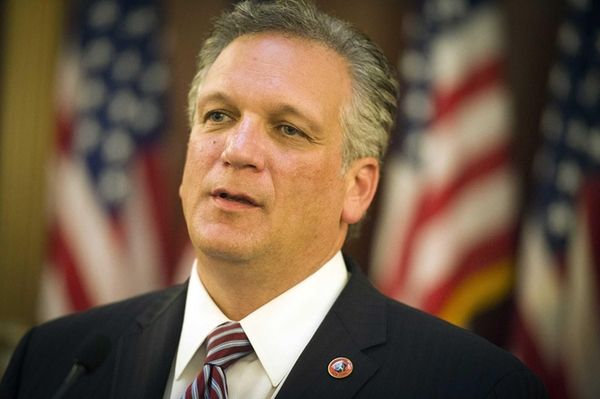
County spokesman Brian Nevin said Nassau County Executive
County spokesman Brian Nevin said Nassau County Executive Edward Mangano's administration was "pleased that all three rating agencies have maintained the county's credit rating during these challenging economic times." (Credit: Newsday / J. Conrad Williams Jr.)
Wall Street agencies have maintained their credit ratings on Nassau's $1.6 billion in long-term debt but warned that new contracts with county labor unions could strain the county's finances and rely on unproven revenue sources.
Moody's Investors Service Thursday maintained its A2 rating on Nassau's general obligation debt, while Fitch Ratings affirmed its A rating of Nassau's long-term debt and continued its negative outlook.
On May 27, Standards & Poor's Rating Services affirmed its A+ long-term rating on the county's debt and left unchanged its SP-1+ short-term credit rating.

STAY UPDATED: News alerts, newsletters | Twitter | Facebook

County spokesman Brian Nevin said County Executive Edward Mangano's administration was "pleased that all three rating agencies have maintained the county's credit rating during these challenging economic times."
But all three rating services raised concerns about how Nassau will pay for the new labor deals, which the county's financial control board says will cost at least $130 million.
Moody's said the county has a stable fiscal outlook due to its wealthy tax base, manageable debt and oversight by the Nassau Interim Finance Authority, a state monitoring board that controls the county's finances.
But Moody's, which has downgraded Nassau's credit rating twice since 2010, said the combination of "highly volatile sales taxes" and the new labor deals will "exacerbate" pressure on the county budget.
Nassau's contract with four county labor unions will provide raises totaling 13.4 percent over four years.
Mangano said the county will fund the raises in part through increased sales tax, revenue from 56 speed cameras that will operate outside county schools and $15 million in new county fees. The county faces a projected deficit of $122 million in 2014, NIFA said last year.
NIFA has given Mangano until June 30 to amend his four-year budget plan and show how he will pay for the labor contracts.


Nassau Legislature votes to hike wide range of fees

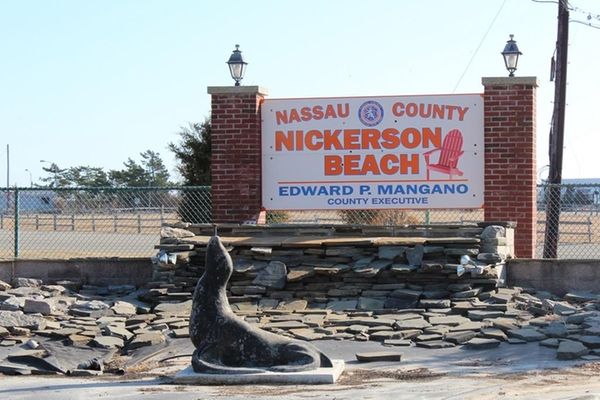
Eugene Nickerson Beach in Lido Beach has special
Eugene Nickerson Beach in Lido Beach has special events and a summer recreation program for children ages 5-12. (Credit: Flickr/Jim Groom)
The Nassau County Legislature voted Monday to hike fees for a wide range of services, including golf at Eisenhower Park, permits for home renovations, admission at Old Bethpage Village Restoration and cabanas at Nickerson Beach.
The increases and new fees -- ranging from a $1 admission bump at county museums to a $275 contract registration fee for county vendors -- were proposed by County Executive Edward Mangano as a way of generating an estimated $15 million in new revenue, and helping to offset the cost of new labor contracts.
County department heads said the fee increases were necessary to cover higher maintenance expenses at county parks and losses from traffic ticket scofflaws.

MORE: Details: Fee hikes | Poll: Do you support hikes?
SEARCH: Nassau County salaries | Nassau County overtime | Nassau County raises | LI town and city payrolls

"The fees bring the county on par with other municipalities and represent the costs associated with delivering services," said Tim Sullivan, deputy county executive for finance.
But the plan sparked opposition, with Legis. Michael Venditto (R-Massapequa) joining eight Democrats in voting against the increases.
Several county residents, including seniors and veterans, spoke out against the increases during public comment, arguing that they would add up for residents who frequent county parks, golf courses and beaches.
"I pay full taxes -- I own the facilities, not the guy who comes from New York City to play a couple of rounds," of golf, said Bob Young of Merrick. "I understand that it may be necessary to raise fees, but I've got a problem with them."
With Venditto and county Legis. David Denenberg (D-Merrick) competing for an open State Senate seat, the fee increases provided fodder for political debate Monday.
Denenberg blasted the increases as "backdoor tax increases." Legis. Richard Nicolello (R-New Hyde Park) shot back that Denenberg and other Democrats had approved fee increases when former Democratic County Executive Thomas Suozzi was in office.
"The fee increase today is what we are debating," Denenberg responded. "Talking about 10 to 15 years ago doesn't change what we're debating now."
Claudia Borecky, a South Shore civic activist and former legislative aide to Denenberg, asked Venditto during a public comment period why he had been absent when the Finance Committee, controlled by majority Republicans, had voted earlier to approve the fee increases.
"You could have stopped these fees in committee," she said.
Venditto did not respond from the dais.
The fee increase bills, which Mangano is expected to sign, would raise the price for a daily parking pass at Nickerson Beach for Nassau residents with a Leisure Pass from $8 to $10. More than 15,000 Nassau residents paid the daily beach parking fee last year, according to county figures.
Admission for adults at Old Bethpage Village Restoration would go from $10 to $11, and maximum admission at Tackapausha Museum and Preserve in Seaford would go from $3 to $4. Prices for a cabana at Nickerson would rise from $3,400 to $3,750.
In a 13-6 vote, the legislature also approved new processing fees for the county's Traffic and Parking Violations Agency, including $15 for scofflaws who fail to respond to tickets and $75 for motorists who don't appear for hearings. Vehicles with two delinquent unpaid traffic tickets could be booted.
Majority Leader Kevan Abrahams (D-Freeport), Legis. Ellen Birnbaum (D-Great Neck) and Legis. Judy Jacobs (D-Woodbury) joined Republicans in voting for the measure.


HI-
Thanks for the help. The item’s below. I’d be happy to mail you a copy, if you give me a mailing address.

Claude Solnik
(631) 913-4244
Long Island Business News
2150 Smithtown Ave.
Ronkonkoma, NY 11779-7348 

Home > LI Confidential > Stop scratching on holidays

Stop scratching on holidays
Published: June 1, 2012


Off Track Betting in New York State has been racing into a crisis called shrinking revenue. Some people have spitballed a solution: Don’t close on holidays.
New York State Racing Law bars racing on Christmas, Easter and Palm Sunday, and the state has ruled OTBs can’t handle action on those days, even though they could easily broadcast races from out of state.
“You should be able to bet whenever you want,” said Jackson Leeds, a Nassau OTB employee who makes an occasional bet. He added some irrefutable logic: “How is the business going to make money if you’re not open to take people’s bets?”
Elias Tsekerides, president of the Federation of Hellenic Societies of Greater New York, said OTB is open on Greek Orthodox Easter and Palm Sunday.
“I don’t want discrimination,” Tsekerides said. “They close for the Catholics, but open for the Greek Orthodox? It’s either open for all or not open.”
OTB officials have said they lose millions by closing on Palm Sunday alone, with tracks such as Gulfstream, Santa Anita, Turf Paradise and Hawthorne running.
One option: OTBs could just stay open and face the consequences. New York City OTB did just that back in 2003. The handle was about $1.5 million – and OTB was fined $5,000.
Easy money.


Fitch said the labor contracts would provide "long-term savings and bring cost certainty to the budget."
But the county's "favorable position is tempered" by higher salary expenses that will be funded with "unproven revenue sources," Fitch said.
Fitch lowered Nassau's credit rating in June 2013 from A+ to A. Downgrades typically result in increased borrowing costs.
S & P maintained the county's stable outlook, citing the county's progress in "restoring structural balance." But S & P said Tuesday that Nassau's financial flexibility remains "weak" because of rising health care and pension costs, "economically sensitive" sales tax revenue and continued borrowing to pay for property tax refunds.
S&P said that if Nassau does not make structural adjustments to its finances, it could drop the county's credit rating during the next two years.


Monday, June 16, 2014

apparently your father

did not teach you of NY Const. Art. 1, Sec.3, the separation of church and state, and people's freedom to bet or not at Nassau OTB and/or work at Nassau OTB any day of the year that they wish.

No one is perfect. Not even you.


HI-
Thanks for the help. The item’s below. I’d be happy to mail you a copy, if you give me a mailing address.

Claude Solnik
(631) 913-4244
Long Island Business News
2150 Smithtown Ave.
Ronkonkoma, NY 11779-7348 

Home > LI Confidential > Stop scratching on holidays

Stop scratching on holidays
Published: June 1, 2012


Off Track Betting in New York State has been racing into a crisis called shrinking revenue. Some people have spitballed a solution: Don’t close on holidays.
New York State Racing Law bars racing on Christmas, Easter and Palm Sunday, and the state has ruled OTBs can’t handle action on those days, even though they could easily broadcast races from out of state.
“You should be able to bet whenever you want,” said Jackson Leeds, a Nassau OTB employee who makes an occasional bet. He added some irrefutable logic: “How is the business going to make money if you’re not open to take people’s bets?”
Elias Tsekerides, president of the Federation of Hellenic Societies of Greater New York, said OTB is open on Greek Orthodox Easter and Palm Sunday.
“I don’t want discrimination,” Tsekerides said. “They close for the Catholics, but open for the Greek Orthodox? It’s either open for all or not open.”
OTB officials have said they lose millions by closing on Palm Sunday alone, with tracks such as Gulfstream, Santa Anita, Turf Paradise and Hawthorne running.
One option: OTBs could just stay open and face the consequences. New York City OTB did just that back in 2003. The handle was about $1.5 million – and OTB was fined $5,000.
Easy money.


From the Office of The Governor
Dear Fellow New Yorker,
Today we honor our fathers and celebrate all that they give to their families and communities every day of the year. The dedication of fathers, grandfathers, brothers, and uncles in the workplace, community, and home strengthens and sustains this great state. This Father’s Day, I am grateful to pay tribute to my dad, Mario M. Cuomo, whose intellectual and moral guidance helped shape me. Let us all take time today to thank the men who mean so much to us. Wishing you and your families a very happy Father’s Day.
Sincerely,

Governor Andrew M. Cuomo


This is a message from the New York State Executive Chamber, State Capitol, Albany, NY 12224.


Stuff the turkeys and drop dead


U.S. News

Advances Made in Regulating Type 1 Diabetes

Software Potentially Could Better Manage Disease Through Automated Insulin Pump, Glucose Monitor


June 15, 2014 9:08 p.m. ET
Medical researchers reported progress in developing software that potentially could better manage Type 1 diabetes through an automated insulin pump and glucose monitor, lowering patients' risk of sudden death or long-term medical complications from the disease.
In two small clinical studies presented at a meeting of the American Diabetes Association in San Francisco on Sunday, researchers said patients with Type 1 diabetes were able to better control their blood sugar when using an insulin-pump system controlled by an algorithm, or mathematical formula, which was embedded in a smartphone application, than when the patients determined the timing and dosage of injections themselves.
The studies, which also were published online Sunday in the New England Journal of Medicine, were conducted by doctors and biomedical engineers from Boston University and Massachusetts General Hospital, and were funded by the National Institutes of Health.
It will take years before such a setup is available to consumers, and there are challenges to making a commercial-grade version of the automated insulin pump.
Independent experts, however, said the results represent an important proof-of-concept for a technology that could provide significant benefits to families grappling with Type 1 diabetes.
"It's a leap ahead in treating diabetes, but it's a research leap—not a leap where patients can now use this," said Anne Peters, director of the clinical diabetes program at the University of Southern California, who wasn't involved in the studies.
Type 1 diabetes, a disease in which the pancreas doesn't produce enough insulin to clear excess sugars from the blood, is typically diagnosed in childhood and affects about 1.5 million to 2 million Americans.
Diabetes management today requires patients and their families to spend hours each week tracking food intake, blood-sugar levels and physical exercise to calculate when and how much insulin to inject into the body.
Wearable devices, such as insulin pumps and continuous glucose monitors, help eliminate some of the guesswork, Dr. Peters said, but the process is still largely a manual one.
If a patient's insulin dosage isn't just right, their blood-sugar levels can rise too high, which over time can cause heart disease and kidney damage. Diabetic patients also are at risk of dying in their sleep if their blood sugar falls too low because of an insulin overdose, a phenomenon known as dead-in-bed syndrome.
In the studies presented Sunday, researchers installed the software algorithm on an Apple Inc. iPhone and wirelessly synced it with insulin pumps and glucose monitors, creating what they call a bionic pancreas capable of determining when and how much insulin to pump.
The system also was able to automatically inject glucagon, an antidote to low blood sugar, which could help reduce the risk of dead-in-bed syndrome, said Edward Damiano, an associate professor of biomedical engineering at Boston University and one of the lead developers of the algorithm.
"What we're providing is a smart pump that overtakes your diabetes management completely," said Mr. Damiano, who has a financial stake in the device's success through patents assigned to Boston University.
In the clinical studies, Mr. Damiano and his colleagues used commercially available devices and pumps and connected them through wireless Bluetooth technology to their iPhone application. But to bring such a device to the market, the researchers will have to develop their own single, self-contained unit. Mr. Damiano said he hopes to have such a device ready for a large clinical trial by 2016.
Insulin pump systems cost upward of $7,000 retail. There are no estimates as to how this development could affect the price tag.
Medical device firms have for years sought to develop a fully automated insulin pump system, sometimes called an artificial pancreas. The U.S. Food and Drug Administration last year approved a device made by Medtronic Inc., MDT -1.10% capable of suspending the flow of insulin if patients' blood sugar fell too low, but not of automatically determining insulin injections.
Write to Joseph Walker at joseph.walker@wsj.com


If you are a Type 1 diabetic see faustmanlab.org and pubmed.org faustman dl and pubmed.org ristori + bcg

I am looking for assistance/assistant to shoot me with BCG again and again and photography my exterior /parts thereof and use my plaque psoriasis as a visual indicator /predictor of internal changes.
I have Type 1 diabetes as well.

I will bet that BCG which affects fundamental processes in the body is better for diabetics than pumping

insulin.

Dear Ed and Son, if you were rich Denise L Faustman could cure your Type 1 diabetes.
You are not rich. Neither am I.
However, if you want to shoot for fun and better days I suggest your read pubmed.org faustman dl and see if you think BCG is for you or not.

I know it is for me. I have some. I am shooting it and I would like to document same on You Tube.

BCG it works for some Type 1 diabetics and I think it will help me.
 

Father Devises A 'Bionic Pancreas' To Help Son With Diabetes

8 min 27 sec


Ed Damiano and his son David,  15, play basketball at home in Acton, Mass. Ed has invented a device he hopes will make David's diabetes easier to manage.
Ed Damiano and his son David, 15, play basketball at home in Acton, Mass. Ed has invented a device he hopes will make David's diabetes easier to manage.
Ellen Webber for NPR
An alarm sounds on Ed Damiano's night stand in the middle of the night. He jumps out of bed and rushes into his son's room next door.
His son, David, has Type 1 diabetes. The 15-year-old sleeps hooked up to a monitor that sounds an alarm when his blood sugar gets too low. If it drops sharply, David could die in his sleep.
"The fear is that there's going to be this little cold limb, and I screwed up. It's all on me," Damiano says.
But when he touches David's hand, he's warm. He's OK. Damiano says, "That's the moment of relief."
The father has been doing this night after night since his son was diagnosed with when he was 11 months old.
But Damiano has done more than nightly monitoring to try to protect his son. He's an associate professor of at Boston University, and has shifted the focus of his career to developing a better way to care for people with Type 1 diabetes.
"It's intimidating when you start considering the list of things that influence blood sugar," he says. "Emotions and physical activity, if you're healthy. You can't possibly take into account and balance all those things. And sometimes you get it right. And often you get it wrong."
Damiano has developed a system he calls a "bionic pancreas" designed to help people better manage their blood sugar. He's racing to get it approved by the Food and Drug Administration before his son leaves for college in three years.
In tests with 52 teenagers and adults, the device did a better job controlling blood sugar than the subjects typically did on their own. The were reported Sunday at an American Diabetes Association meeting in San Francisco and also in the New England Journal of Medicine.
At the moment, Damiano's system is basically a sophisticated app that runs on an iPhone. The iPhone is connected wirelessly to the kind of that many people with diabetes wear taped to their abdomens.
Ed tests tubing for his son's insulin pump.
Ellen Webber for NPR
The app analyzes the data from the monitor and sends signals wirelessly to two pumps that are similar to many diabetes patients wear to infuse themselves with insulin. In this case, one pump contains insulin and the other contains glucagon, a different hormone that raises blood sugar when it gets too low.
"The bionic pancreas is a device that automatically takes care of your blood sugars 24/7," Damiano says. "It's a device that comes to know you."
David wears a transmitter on his abdomen that sends data on his glucose levels to a monitoring unit.
Ellen Webber for NPR
He is not the only one working on something like this. Several groups in the United States and elsewhere are testing similar systems. But Damiano's system is one of the most advanced. For example, it is one of the few that uses both insulin and glucagon.
Diabetes specialists at the National Institutes of Health and the Juvenile Diabetes Research Foundation, both of which have provided funding for Damiano's research, say his system is promising. But it remains unclear which approach will work best, they say. Damiano's could, for example, turn out to be too complicated.
"Because it's more complex, using a pump for each hormone, it may also make it more challenging for the people using it if there is a failure of the system," says , a program director at the National Institute of Diabetes and Digestive and Kidney Diseases. In the worst-case scenario, someone could die from severe hypoglycemia if the device failed.
Based on the results of the last round of testing, Damiano has gotten approval to launch a new round of testing. Dozens of adult and adolescent volunteers will use the system on their own for 11 days. The first volunteers start Monday.
"This thing is going to take the worries about my blood sugar off my hands," says Ariana Koster, 24, one of the volunteers. Koster has been struggling with diabetes since she was 11.
This pump uses the hormone  glucagon to help provide better blood sugar control.
This pump uses the hormone glucagon to help provide better blood sugar control.
Ellen Webber for NPR
During a recent dry run for the new study, Koster tried the system for three days. For the first time in years, she says, she did not have to obsess over her blood sugar. She even snuck a cookie in the middle of one night, and indulged in her favorite food: pad thai.
"I can already see how awesome it is," Koster said.
There are not yet companies involved in developing the device. Damiano hopes to win the FDA's approval just in time for his son David's first night alone in his dorm room. For his part, David is confident his dad's bionic pancreas will be ready in time.
Ed and David work through problems for an algebra final. Both father and son hope the bionic pancreas will be approved for use by the time David goes to college.
Ellen Webber for NPR
"My whole life I've just known — just had this knowledge that my dad is going to have this bionic pancreas out when I go to college," David says. "I'm confident in him. He works really hard — really hard."
Story produced for broadcast by Rebecca Davis.
 

Friday, June 13, 2014

Cuomo tells the Bishops that

he has them covered with the New York Steam Roller to keep the Greeks out of Nassau OTB, and Andrew Cuomo PUBLIC BENEFIT CORPORATION  on the real Easter Sunday and Palm Sunday and that NY Const. Art. 1, Sec. 3 is toilet paper.

Fordham Law School Special Forces Lawyer will be deployed to obliterate any infidel or non believer who dares think that Nassau OTB must be open 365 days of the year without religious preference.

U.S.

U.S. Bishops Seek to Match Vatican in Shifting Tone


Photo

Catholic Bishops chatted during a coffee break at the United States Conference of Catholic Bishops on Thursday in New Orleans. Credit Edmund D. Fountain for The New York Times
Continue reading the main story Share This Page

NEW ORLEANS — They are rethinking what kinds of houses they live in, and what kinds of cars they drive. They are wondering whether, in anticipation of the 2016 presidential election, they need to rewrite their advice to parishioners to make sure that poverty, and not just abortion, is discussed as a high-priority issue. And they are trying to get better about returning phone calls, reaching out to the disenchanted and the disenfranchised, and showing up at events.
Fifteen months into the pontificate of Pope Francis, the Roman Catholic bishops of the United States find themselves unsettled in ways large and small, revisiting both how they live and what they talk about in light of the new pope’s emphasis on personal humility and economic justice.
Over the last several days as the bishops gathered here for their semiannual meeting, they grappled with the substantive and stylistic implications of a still-new papacy.
After several of their colleagues faced recent criticism for lavish houses, several bishops said in interviews that they were paying new attention to their own spending, mindful of the pope’s decision to eschew the apostolic palace for a small suite in a Vatican guesthouse, and aware that their parishioners are concerned about how the church uses its money.

Photo

From left, Cardinal Daniel N. DiNardo of Houston; Archbishop Joseph E. Kurtz of Louisville, Ky.; and Msgr. Ronny Jenkins. Credit Edmund D. Fountain for The New York Times

“They have a justifiable demand that we not spend extravagantly on ourselves, but that we share those goods with others, and he’s really forced that issue,” said Bishop Blase J. Cupich of Spokane, Wash. Bishop Cupich noted that he owns no furniture and lives in a room at a seminary, and he said he is re-evaluating his diocesan budget to make sure it emphasizes assisting the poor.
Bishop Gerald F. Kicanas of Tucson said he, too, thinks about Francis as he shapes his agenda, which, he said, now focuses on poverty, homelessness, addiction, violence and immigration. And, he said, he is mindful of his own spending.
“We have to have a home, have to have a car that’s not going to fall apart in the middle of the desert, but within reason we have to live simply,” he said. “The Holy Father is such a model of trying to live with simplicity, and that is working its way into the lives of bishops.”
Spending was clearly on the minds of the church’s leaders, some of whom live in grand homes and preach in landmark churches built decades ago as testaments to Catholicism’s acceptance and success after a period of discrimination in the United States. Asked a general question about the pope’s impact on bishops, Cardinal Donald W. Wuerl, the archbishop of Washington, responded with a defense of the upscale hotel where the bishops were meeting, the Hyatt Regency New Orleans.
“We have to meet at a hotel that’s big enough to hold us,” he said. “We have to meet at a hotel that’s big enough to allow media to attend.”
The shift in tone at the Vatican has been disquieting for some bishops. The archbishop of Indianapolis, Joseph W. Tobin, recently told a group of theologians, “What I’ve seen is how disruptive Pope Francis has been within the hierarchy of the United States,” according to The National Catholic Reporter. “I was talking to a couple of brother bishops a while back and they were saying that bishops and priests were very discouraged by Pope Francis because he was challenging them.”
But the bishops are clearly watching with interest. “Priests and bishops are paying close attention to what he’s saying, and reading it,” John Garvey, the president of the Catholic University of America, said in a telephone interview. Mr. Garvey said he was struck by how often church officials mentioned to him something the pope had only just said. “I don’t remember hearing that in the past about Benedict and John Paul.”
The business of the bishops’ meeting — presentations about clergy sexual abuse and assistance to victims of flooding in the Philippines, as well as about the church’s battles against same-sex marriage and in favor of religious freedom — was planned months ago.
But on Thursday morning, the bishops also spent several hours discussing poverty and the relationship between marriage and economic well-being, both topics chosen to reflect the pope’s priorities. Helen M. Alvaré, a law professor at George Mason University, told the bishops that the Francis papacy was “an inflection point in the life of the church.”
The bishops’ willingness to adapt their agenda to reflect that of Francis will most likely be tested next year, when they must decide how to update their quadrennial guide for Catholic voters. The American bishops, almost all of them appointed by Pope John Paul II or Pope Benedict, are a conservative group who have emphasized opposition to same-sex marriage and abortion in recent years and have been unable to reach a consensus on economic issues. On Wednesday, they began a discussion, which will continue through next year, about whether and how to incorporate the priorities of Francis in the 2016 version of the guide, which is called “Forming Consciences for Faithful Citizenship.”
“We need to keep talking about the hot-button issues that we’ve been talking about for a long time, but not just those issues,” Archbishop Gregory M. Aymond of New Orleans said in an interview. He added, “We don’t, perhaps, at times talk enough about the poor, about the economy, and we don’t perhaps talk enough about reaching out to those with disabilities, those whose voices are not heard.”
Archbishop Aymond said he has tried to address this in one small way himself, by returning phone calls and letters, and by reminding himself, “people shouldn’t always have to go through several others to get to us.”
Archbishop Joseph E. Kurtz of Louisville, Ky., the president of the United States Conference of Catholic Bishops, told the gathering that, if the voters’ guide is not revised, “it will not include anything of the teachings of Pope Francis.” And Bishop Robert W. McElroy, an auxiliary bishop in San Francisco, suggested that the document’s discussion of evil, now focused on abortion and racism, should be revisited in light of the pope’s description of economic inequality as a social evil.
Cardinal Daniel N. DiNardo of Houston, who has been leading the bishops’ effort to consider reworking “Faithful Citizenship,” said the document would not shy away from the abortion issue, which he called “very important, crucial, significant, one of the chief issues” and “nonnegotiable.” But, he said, to reflect Francis’ agenda, the bishops would also “want to make sure we speak very insistently about the role of poverty, about the role of the economy.”
Archbishop Charles J. Chaput of Philadelphia is leading the bishops’ most Francis-friendly effort — to persuade the pope to visit that city next year, when a large gathering of Catholic families is planned there. Archbishop Chaput said he already had “good reasons to believe” the pope would come to the event. But just in case, the entire bishops’ conference agreed to send a letter to Francis, inviting him to attend, and, in the process, to make what would be his first trip to the United States as pope.

 
HI-
Thanks for the help. The item’s below. I’d be happy to mail you a copy, if you give me a mailing address.

Claude Solnik
(631) 913-4244
Long Island Business News
2150 Smithtown Ave.
Ronkonkoma, NY 11779-7348 

Home > LI Confidential > Stop scratching on holidays

Stop scratching on holidays
Published: June 1, 2012


Off Track Betting in New York State has been racing into a crisis called shrinking revenue. Some people have spitballed a solution: Don’t close on holidays.
New York State Racing Law bars racing on Christmas, Easter and Palm Sunday, and the state has ruled OTBs can’t handle action on those days, even though they could easily broadcast races from out of state.
“You should be able to bet whenever you want,” said Jackson Leeds, a Nassau OTB employee who makes an occasional bet. He added some irrefutable logic: “How is the business going to make money if you’re not open to take people’s bets?”
Elias Tsekerides, president of the Federation of Hellenic Societies of Greater New York, said OTB is open on Greek Orthodox Easter and Palm Sunday.
“I don’t want discrimination,” Tsekerides said. “They close for the Catholics, but open for the Greek Orthodox? It’s either open for all or not open.”
OTB officials have said they lose millions by closing on Palm Sunday alone, with tracks such as Gulfstream, Santa Anita, Turf Paradise and Hawthorne running.
One option: OTBs could just stay open and face the consequences. New York City OTB did just that back in 2003. The handle was about $1.5 million – and OTB was fined $5,000.
Easy money.