Monday, February 23, 2015

soros and mike team up

Yale J Biol Med. 2012 Sep;85(3):417-9. Epub 2012 Sep 25.

A report of the James Watson lecture at Yale University.

Abstract

In March 2012, Nobel Prize winner James Watson gave a seminar at Yale University entitled "Driven by Ideas." In his lecture, Watson discussed his personal vision for the future of science, specifically addressing how the scientific community should approach developing anticancer agents. He discussed the use of glycolytic inhibitors as anticancer agents due to the Warburg effect, as well as the benefits of metformin and anti-inflammatory drugs to help prevent cancer. He also compared drugs that target cell proliferation instead of targeting cell growth. Additionally, Watson commented on the mechanisms for how research should be conducted in the laboratory.

KEYWORDS:

James Watson; Warburg effect; cancer; cell proliferation; inflammation; metformin
Open Biol. 2013 Jan 8;3(1):120144. doi: 10.1098/rsob.120144.

Oxidants, antioxidants and the current incurability of metastatic cancers.

Abstract

The vast majority of all agents used to directly kill cancer cells (ionizing radiation, most chemotherapeutic agents and some targeted therapies) work through either directly or indirectly generating reactive oxygen species that block key steps in the cell cycle. As mesenchymal cancers evolve from their epithelial cell progenitors, they almost inevitably possess much-heightened amounts of antioxidants that effectively block otherwise highly effective oxidant therapies. Also key to better understanding is why and how the anti-diabetic drug metformin (the world's most prescribed pharmaceutical product) preferentially kills oxidant-deficient mesenchymal p53(- -) cells. A much faster timetable should be adopted towards developing more new drugs effective against p53(- -) cancers.
to sell inferior MORE EXPENSIVE JUNK as you waste away and die

Bet the LI combination therapy, safe, cheap and inexpensive and supported by even a cursory search of pubmed.org

got cancer, take metformin and aspirin. selectively kills cancer cells, and thus gives you more time to decide who you might wish to kill or how you might better spend your time than paying for Michael's JUNK.


for a nonimal price in the millions Dr Denise L Faustman might sell you the peptide to cure autoimmune diseases. sadly there is little incentive to sell something that works rather than something that does not work well and costs alot.

the most utilized medicine of modern times is Hiram Maxim's guaranteed cure for all ills. A shot of lead to the head from an automatic dispenser.  Used all over the world with good results, the machine gun has cured man of whatever ails him.

on a more serious not see


Mol Carcinog. 2015 Feb 7. doi: 10.1002/mc.22284. [Epub ahead of print]

Autophagy and protein kinase RNA-like endoplasmic reticulum kinase (PERK)/eukaryotic initiation factor 2 alpha kinase (eIF2α) pathway protect ovarian cancer cells from metformin-induced apoptosis.

Abstract

Metformin, an oral biguanide for the treatment of type II diabetes, has been shown to have anticancer effects in ovarian cancer. Energy starvation induced by metformin causes endoplasmic reticulum stress-mediated unfolded protein response (UPR) and autophagy. UPR and autophagy act as a survival or death mechanism in cells. In this study, we observed that metformin-induced apoptosis was relieved by autophagy and the PERK/eIF2α pathway in ovarian cancer cells, but not in peripheral blood mononuclear cells (PBMC) or 'normal' ovarian surface epithelial cells (OSE). Increased PARP cleavage and increased LC3B-II with ATG5-ATG12 complex suggested the induction of apoptosis and autophagy, respectively, in metformin-treated ovarian cancer cells. Accumulation of acidic vacuoles in the cytoplasm and downregulation of p62 further supported late-stage autophagy. Interestingly, metformin induced interdependent activation between autophagy and the UPR, especially the PERK/eIF2α pathway. Inhibition of autophagy-induced PERK inhibition, and vice versa, were demonstrated using small molecular inhibitors (PERK inhibitor I, GSK2606414; autophagy inhibitor, 3-MA, and BafA1). Moreover, autophagy and PERK activation protected ovarian cancer cells against metformin-induced apoptosis. Metformin treatment in the presence of inhibitors of PERK and autophagy, however, had no cytotoxic effects on OSE or PBMC. In conclusion, these results suggest that inhibition of autophagy and PERK can enhance the selective anticancer effects of metformin on ovarian cancer cells. © 2015 Wiley Periodicals, Inc.

Ann Transl Med. 2014 Jun;2(6):57. doi: 10.3978/j.issn.2305-5839.2014.06.01.

Metformin in cancer prevention and therapy.

Abstract

The prevalence of diabetes is dramatically increasing worldwide. The results of numerous epidemiological studies indicate that diabetic population is not only at increased risk of cardiovascular complications, but also at substantially higher risk of many forms of malignancies. The use of metformin, the most commonly prescribed drug for type 2 diabetes, was repeatedly associated with the decreased risk of the occurrence of various types of cancers, especially of pancreas and colon and hepatocellular carcinoma. This observation was also confirmed by the results of numerous meta-analyses. There are however, several unanswered questions regarding the exact mechanism of the anticancer effect of metformin as well as its activity against various types of cancer both in diabetic and nondiabetic populations. In the present work we discuss the proposed mechanism(s) of anticancer effect of metformin and preclinical and clinical data suggesting its anticancer effect in different populations.


New Cancer Technology Gives Investors a Shot in the Arm

Immunotherapy’s promise is drawing some marquee financiers


Bristol-Myers Squibb Co.'s Yervoy melanoma treatment is among those immunotherapy drugs fueling red-hot interest in the sector and giving new hope in the fight against cancer. ENLARGE
Bristol-Myers Squibb Co.'s Yervoy melanoma treatment is among those immunotherapy drugs fueling red-hot interest in the sector and giving new hope in the fight against cancer. Photo: Bristol-Myers Squibb/Bloomberg News
George Soros , Michael Milken and David Bonderman are among marquee investors benefiting from early bets on a red-hot sector: young companies developing drugs that fight cancer by using the body’s immune system.
Interest in the nascent approach, known as immunotherapy, has taken off following the success of Yervoy and Opdivo, a pair of drugs developed by giant Bristol-Myers Squibb Co. The treatments could generate $8.5 billion in annual revenue by 2020, Credit Suisse predicts, or more than half the New York company’s 2014 revenue of $15.9 billion.
Hopes that fledgling companies will repeat and extend upon those advances are behind the recent share-price gains in Juno Therapeutics Inc., Kite Pharma Inc. and bluebird bio Inc. Their treatments, which take a different approach than Bristol-Myers’s, haven’t yet reached the market.
Advertisement
“It’s clearly something new and it won’t be smooth sailing,” said Arie Belldegrun, Kite’s chairman and chief executive. “But if we can deliver what we promise, for the first time you won’t talk about remission, you can even talk about cure of cancer.”
Earlier this month, Standard & Poor’s released a report naming five cancer immunotherapy agents among its top 10 drug prospects for 2015, underscoring growing enthusiasm for the strategy. Drugs made the list for their likely blockbuster sales potential as well as their probable impact on individual companies. No such drugs were included on its previous list in 2009.
Advertisement
More companies are gaining “insights into underlying biology plus an understanding of biological systems that should transform the treatment of many extremely serious diseases,” said James E. Flynn, managing partner at Deerfield Management Co., an investment firm betting on the area.
Among companies fueling current interest, only Bristol-Myers and Merck & Co. have had immunotherapy drugs approved by the U.S. Food and Drug Administration. For many of the smaller-cap companies, it will be a year or more before studies help clarify the benefits, risks and market potential of their treatments.
Shares of Juno, which is developing therapies for leukemias and lymphomas, ended Friday’s trading at $45.52, following a December initial public offering at $24. Kite Pharma has soared to $62.80 from $28 since the beginning of October. Bluebird bio, driven more by advances by gene-therapy drugs than in immunotherapy, has climbed to $93.32 from $39 since early December.
The three companies’ treatments are complex, likely to be expensive and cause severe side effects for some patients; none has yet been approved. But the strategy has shown dramatic results in leukemia and other blood cancers in early trials and researchers are racing to find ways to extend their use to other cancers.
Indeed, researchers world-wide are working on various types of immunotherapy treatments, as well as strategies to combine them with existing treatments to tackle all kinds of cancer and extend their benefits to more patients.
Mr. Bonderman, a founder of TPG Capital, is Kite’s fourth-largest shareholder and a board member, with over 6% of the company’s stock from an early, personal investment, according to FactSet. He has seen his holdings soar to about $145 million in value.
Another early investor, hedge-fund veteran Donald Sussman, founder of Paloma Partners Management, holds a Kite stake worth about $100 million, according to regulatory filings. Representatives of Messrs. Bonderman and Sussman declined to comment.
George Soros’s Soros Fund Management owns about 1.7% of Kite Pharma Inc.’s shares. ENLARGE
George Soros’s Soros Fund Management owns about 1.7% of Kite Pharma Inc.’s shares. Photo: European Pressphoto Agency
The firm that manages George’s Soros’s wealth, Soros Fund Management, is Kite’s 11th-largest holder. It owns about 1.7% of the company’s stock after purchasing the shares at less than $30 each last summer, according to filings. A spokesman declined to comment.
Michael Milken also was an early investor in the company, said Mr. Belldegrun. A spokesman for Mr. Milken, who declined to confirm the investment, said the former junk-bond king’s “more than four decades of philanthropic work in medical research and public health has given him a deep understanding of the potential for lifesaving advances.”
Deerfield Management owns about 4% of the shares of bluebird, according to the most recent filings, while Steve Cohen ’s Point72 Asset Management LP owns nearly 2% of the shares. A spokesman for Point72 didn’t comment.
Amazon.com Inc. founder Jeff Bezos and Microsoft Corp. co-founder Paul Allen are investors in Juno, says Robert Nelsen, co-founder of Seattle-based venture-capital firm Arch Venture Partners, which controls stakes worth about $1 billion in nearly a half dozen companies pursuing immunotherapy and other cancer treatments. Arch owns about $470 million in shares of Juno, a company Arch co-founded, as well as $78 million of bluebird.
“I have been creating biotech companies for 28 years and this is the first one where the jaded doctors who have seen everything and have lost hope are shaking their heads in amazement,” said Mr. Nelsen, a managing director at Arch, which manages more than $2 billion.
A spokesman for Mr. Allen confirmed his investment in Juno. A spokesman for Amazon.com declined to comment.
Pension funds and venture-capital funds also are among those riding immunotherapy investments higher. The Alaska Permanent Fund Corp. was an early investor in Juno and controls a nearly 30% stake in the company worth about $1.1 billion. The state investment fund has yet to cash out any shares.
Bristol and others working on immunotherapy drugs, including Merck, Roche Holding AG , AstraZeneca PLC and Novartis AG , are so large the financial impact of their immunotherapy drugs could be diluted by other businesses. That is why investors are bidding up smaller companies.
Not all the immunotherapy news has been upbeat, though: Dendreon Corp. , whose prostate cancer vaccine Provenge was hailed as the first immunotherapy at its approval in 2010, foundered amid limited efficacy, marketing gaffes, and better rival medicines. Dendreon is expected to be sold this month under bankruptcy court supervision to Valeant Pharmaceuticals International Inc. for $495 million.
The intense interest in immunotherapy, an idea that dates back to the 19th century, has emerged from a key discovery researcher James Allison made in the mid-1990s.
Dr. Allison, now the head of immunology at MD Anderson Cancer Center in Houston, discovered a way of releasing a natural brake on the immune system. Dr. Allison’s work paved the way for the development of Bristol-Myers’s Yervoy drug, which was approved in 2011 and was the first drug ever shown to improve survival in patients with advanced melanoma.
“Our understanding of the immune system, and how it interacts with cancer, has grown dramatically,” says Dr. Jill O’Donnell-Tormey, chief executive and director of scientific affairs at the Cancer Research Institute, which funds immunotherapy research.
Write to Gregory Zuckerman at gregory.zuckerman@wsj.com and Ron Winslow at ron.winslow@wsj.com

Saturday, February 21, 2015

If Michael Fitzpatrick valued

work, he would see that Nassau OTB, a public benefit corporation, is open 365 days of the year, without religious preference.

A defined benefit system should be kept in place.

Public Trust in Government may be restored when more government employees put in an honest day's work for an honest day's pay.

I-

Thanks for the help. The item’s below. I’d be happy to mail you a copy, if you give me a mailing address.


Claude Solnik

(631) 913-4244

Long Island Business News

2150 Smithtown Ave.

Ronkonkoma, NY 11779-7348


Home > LI Confidential > Stop scratching on holidays
Stop scratching on holidays
Published: June 1, 2012

Off Track Betting in New York State has been racing into a crisis called shrinking revenue. Some people have spitballed a solution: Don’t close on holidays.

New York State Racing Law bars racing on Christmas, Easter and Palm Sunday, and the state has ruled OTBs can’t handle action on those days, even though they could easily broadcast races from out of state.

“You should be able to bet whenever you want,” said Jackson Leeds, a Nassau OTB employee who makes an occasional bet. He added some irrefutable logic: “How is the business going to make money if you’re not open to take people’s bets?”

Elias Tsekerides, president of the Federation of Hellenic Societies of Greater New York, said OTB is open on Greek Orthodox Easter and Palm Sunday.

“I don’t want discrimination,” Tsekerides said. “They close for the Catholics, but open for the Greek Orthodox? It’s either open for all or not open.”

OTB officials have said they lose millions by closing on Palm Sunday alone, with tracks such as Gulfstream, Santa Anita, Turf Paradise and Hawthorne running.

One option: OTBs could just stay open and face the consequences. New York City OTB did just that back in 2003. The handle was about $1.5 million – and OTB was fined $5,000.

Easy money.


Reform More Important Than Ever

A Legislative Column from Assemblyman Mike Fitzpatrick (R,C,I-Smithtown)
January 30, 2015
Sheldon Silver’s arrest on federal bribery and corruption charges highlights the on-going need to reform our state’s expensive pension system for elected officials. If Silver is convicted, he will remain eligible to collect a taxpayer-funded pension – which is a gross misuse of public funds and should be changed. A recent article published online by the Albany Times Union exposed the amount of money Sheldon Silver stands to make should he retire from office in the coming weeks. Making use of a pension calculator created by the independent Empire Center policy group, the report shows that, should Silver decide to take his pension, he will make $87,120 annually, $7,620 more than the current $79,500 base legislator pay for ”doing his job” – when he is present. Under the laws of the U.S. Constitution, Sheldon Silver deserves due process, as does any American, and is presumed innocent until proven guilty. What he does not deserve, nor does any legislator who violates the public trust, is the opportunity to collect a pension paid for by the taxpayers of New York State if he is convicted of the felony charges against him. New Yorkers, statewide, struggle to make ends meet before they can even begin to dream about retirement savings, and they should not be burdened further by funding the pensions of convicted felons. Since I was first elected, I have advocated for pension reform as a means to reforming the way the state spends taxpayer dollars. I have introduced reform bills to transition the political class from the current defined-benefit system to a defined-contribution, 401 (k) style, retirement plan in an effort to reduce the tax burden on our residents. Yet now, further reforming public pensions is imperative to help restore public trust in government. If convicted of a felony, elected officials should be stripped of their taxpayer-funded pensions, and state law should require it. We should accept nothing less. I will continue to fight for pension reform. This session, I will continue to sponsor legislation to require elected officials convicted of a felony while in the course of their public duties to forfeit their pension and retirement benefits.

If you want NY money you

should see that Nassau OTB, a public benefit corporation, is open 365 days of the year. Your tracks are running and NY bettors want to bet at Nassau OTB.  Help. See eg NY Const. Art 1, Sec 3.

Coordination is of little use if the doors to the betting establishment of the bettors choice are not open.

Racetracks in the U.S. are more likely to coordinate their live racing schedules to avoid overlapping post times due to the recent acquisition by Television Games Network of its only broadcast competitor, HRTV, according to officials involved in the deal.
The deal likely will result in racetracks being separated into two classes, with the most popular tracks broadcast on TVG and the signals of less-popular tracks residing on HRTV, according to the officials. As a result, racetracks that are shown consistently on each network are more likely to seek separation from the post times of competitors, the officials said, in order to maximize the amount of time that viewers have to evaluate a race and place their bets.
The officials said that a greater degree of coordination will be possible in large part because HRTV and TVG will no longer show the same races on their networks, freeing up slots for 5,000 additional races to be broadcast live annually between the two networks when production operations are consolidated at TVG’s Los Angeles studio in the next several weeks, TVG officials said.
TVG, which is currently available in 35 million households, according to the network, likely will continue to broadcast six to eight live races an hour, which ideally would allow for seven to 10 minutes of broadcast time between races. Since TVG currently reaches almost twice as many households as HRTV, the most popular signals will be concentrated on TVG, making a Saturday afternoon in April a showcase for live racing from Santa Anita, Gulfstream, Keeneland, and Aqueduct, for example.
For some small tracks, however, the merger of the two networks will mean losing airtime on the more widely distributed TVG, creating the potential for strained business relationships. TVG officials said that some tracks have deals guaranteeing a certain number of live broadcasts on TVG, and that those deals will continue to be honored through the term of the contracts. However, the officials said they did not expect those deals to “have a lot of impact” on programming decisions.
As a result, an exact separation between class A and B tracks is not likely to take place immediately, if ever, especially as some tracks tweak their live racing schedules to take advantage of empty airtime slots on TVG or HRTV.
“We have been doing a lot of work on scheduling the two networks, and it is safe to say that there is plenty of quality content for both,” a TVG official said in response to written questions. “As the more broadly distributed platform, TVG will continue to feature many of the tracks that it has in the past in addition to Gulfstream and Santa Anita. There will also be schedule considerations based on regional strength of distribution, availability of signals, and other factors.”
Critically, perhaps, the merger will not dampen the competition between TVG’s account-wagering service and XpressBet.com, owned by The Stronach Group, the former parent of HRTV and the owner of Santa Anita and Gulfstream. According to the officials, the deal does not prevent either network from promoting its own account-wagering service alongside the broadcasts of races, so TVG will be free to drive customers to its account-wagering operation while broadcasting races from Stronach Group tracks. In addition, TVG is planning to promote its account-wagering operation on HRTV.
As with any company that owns both racetracks and an account-wagering operation, the Stronach Group retains a far larger share of the revenue from a bet on its tracks when the wager is placed through its own account-wagering service vs. the account-wagering operation of a competitor like TVG. That could lead to ill will between the companies if betting begins to migrate heavily to either one of their ADWs.
The situation regarding the broadcast of content from tracks owned by Churchill Downs Inc. is also not entirely clear yet. The contract providing HRTV with the rights to broadcast live races from Churchill’s properties – Churchill Downs in Louisville, Ky., Fair Grounds in New Orleans, and Arlington Park outside Chicago – is still in force at HRTV as a result of the merger, according to Scott Daruty, the president of HRTV. But that contract specifically assigns the rights to HRTV, Daruty said, leading to questions as to whether TVG will be able to broadcast the races as well.
It would seem to be in Churchill’s best interests to have its races broadcast on TVG, but the company also operates its own account-wagering company, twinspires.com, and relations between Churchill officials and TVG have not exactly been cordial over recent years. Twinspires.com and TVG are the two largest account-wagering companies in the U.S., and Churchill Downs bought a 50 percent share in HRTV in 2007 as a counterweight to TVG’s market power. The company sold the half-share back to The Stronach Group last year, but its live broadcast signals remained exclusive to HRTV.
Churchill officials have not responded to specific requests to clarify the status of the company’s contract with HRTV since the merger was announced Wednesday.


HI-

Thanks for the help. The item’s below. I’d be happy to mail you a copy, if you give me a mailing address.


Claude Solnik

(631) 913-4244

Long Island Business News

2150 Smithtown Ave.

Ronkonkoma, NY 11779-7348


Home > LI Confidential > Stop scratching on holidays
Stop scratching on holidays
Published: June 1, 2012

Off Track Betting in New York State has been racing into a crisis called shrinking revenue. Some people have spitballed a solution: Don’t close on holidays.

New York State Racing Law bars racing on Christmas, Easter and Palm Sunday, and the state has ruled OTBs can’t handle action on those days, even though they could easily broadcast races from out of state.

“You should be able to bet whenever you want,” said Jackson Leeds, a Nassau OTB employee who makes an occasional bet. He added some irrefutable logic: “How is the business going to make money if you’re not open to take people’s bets?”

Elias Tsekerides, president of the Federation of Hellenic Societies of Greater New York, said OTB is open on Greek Orthodox Easter and Palm Sunday.

“I don’t want discrimination,” Tsekerides said. “They close for the Catholics, but open for the Greek Orthodox? It’s either open for all or not open.”

OTB officials have said they lose millions by closing on Palm Sunday alone, with tracks such as Gulfstream, Santa Anita, Turf Paradise and Hawthorne running.

One option: OTBs could just stay open and face the consequences. New York City OTB did just that back in 2003. The handle was about $1.5 million – and OTB was fined $5,000.

Easy money.


Suffolk Man of Leisure should

stand up for the right to work or not at Suffolk OTB on any day of the year.


Perhaps he may read NY Const Art 1, Sec 3

Give him a call and ask him


District Office
50 Route 111 Suite 202
Smithtown, NY 11787
631-724-2929
Fax: 631-724-3024
District Office Directions
Albany Office
LOB 458
Albany, NY 12248
518-455-5021
Fax: 518-455-4394
Albany Office Directions


State lawmaker moves to shelve video gambling parlors on Long Island

State Assemb. Michael Fitzpatrick climbs to unveil Dr. State Assemb. Michael Fitzpatrick climbs to unveil Dr. John J. O'Donnell Road, changed from Manor Road, on Aug. 17, 2013. Photo Credit: Johnny Milano
Spin Cycle News, views and commentary on Long Island, state and national politics.
advertisement | advertise on newsday
ALBANY - A Long Island Republican moved Friday to shelve gambling parlors on Long Island altogether, following a vocal backlash against siting video slot machine parlors in Medford and Westbury.
Assemb. Michael Fitzpatrick (R-St. James) said he's has introduced a bill that would repeal state authorization for video lottery terminals in Nassau and Suffolk, saying it's unlikely any municipality "wants the problems that come with" siting the gambling halls.
advertisement | advertise on newsday
"Communities at large are saying no dice," said Fitzpatrick, who will host a news conference on the issue Monday in Hauppauge. "The reaction we saw in Westbury and Medford, I think, will be the same reaction in Smithtown, the same reaction in Huntington, the same reaction in Riverhead. I think it will be the reaction everywhere."
But State Sen. Philip Boyle (R-Bay Shore), who led the push to authorize VLTs for Nassau and Suffolk, opposes Fitzpatrick's bill.
"No, absolutely not," Boyle said when asked if the State Legislature should repeal the authorization. "Long Islanders need the opportunity to get their fair share of these [gambling] revenues."
State lawmakers originally pitched gambling expansion as a way to help Nassau and Suffolk finances. In 2013, the legislature authorized each county to build gambling parlors with up to 1,000 video slot machines, also called video lottery terminals. But the idea ran into roadblocks once officials began trying to pick specific sites.
advertisement | advertise on newsday
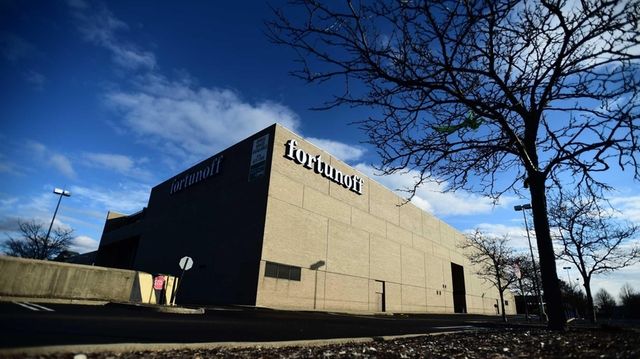
Nassau Off-Track Betting Corp., which estimates the gambling parlors will generate $20 million in new revenue for Nassau County, withdrew a proposal to use a vacant Fortunoff property in Westbury after vocal protests.
Suffolk Off-Track Betting Corp., which has declined to say how much Suffolk would get, has encountered opposition to its plan to use the former Brookhaven Multiplex movie theater in Medford.
Fitzpatrick noted that the gambling expansion law in 2013 required that casinos looking to operate upstate get approval from host communities -- but required no such approval on Long Island.
As a minority Republican, Fitzpatrick will need a Democrat to carry the bill in the Assembly.
Fitzpatrick, who opposed the 2013 gambling law, said state lawmakers and officials "underestimated" how Island residents would react to gambling parlors.
advertisement | 
"We have to correct the mistake we made," he said.
Boyle said that if local residents oppose a particular proposal, "they can organize and get OTB to change its mind," as in Westbury.
A spokesman for Nassau County Executive Edward Mangano declined to comment. Aides to Suffolk County Executive Steve Bellone didn't immediately return messages for comment Friday
51 comments


  HI-

Thanks for the help. The item’s below. I’d be happy to mail you a copy, if you give me a mailing address.


Claude Solnik

(631) 913-4244

Long Island Business News

2150 Smithtown Ave.

Ronkonkoma, NY 11779-7348


Home > LI Confidential > Stop scratching on holidays
Stop scratching on holidays
Published: June 1, 2012

Off Track Betting in New York State has been racing into a crisis called shrinking revenue. Some people have spitballed a solution: Don’t close on holidays.

New York State Racing Law bars racing on Christmas, Easter and Palm Sunday, and the state has ruled OTBs can’t handle action on those days, even though they could easily broadcast races from out of state.

“You should be able to bet whenever you want,” said Jackson Leeds, a Nassau OTB employee who makes an occasional bet. He added some irrefutable logic: “How is the business going to make money if you’re not open to take people’s bets?”

Elias Tsekerides, president of the Federation of Hellenic Societies of Greater New York, said OTB is open on Greek Orthodox Easter and Palm Sunday.

“I don’t want discrimination,” Tsekerides said. “They close for the Catholics, but open for the Greek Orthodox? It’s either open for all or not open.”

OTB officials have said they lose millions by closing on Palm Sunday alone, with tracks such as Gulfstream, Santa Anita, Turf Paradise and Hawthorne running.

One option: OTBs could just stay open and face the consequences. New York City OTB did just that back in 2003. The handle was about $1.5 million – and OTB was fined $5,000.

Easy money.


Friday, February 20, 2015

NYC OTB concurs

Photo
Herald Price Fahringer reading a copy of Screw magazine. His representation of its publisher, Al Goldstein, resulted in a mistrial and an overturned conviction. Credit Charles Gatewood
Herald Price Fahringer, an urbane New York lawyer who forswore most vices himself but who, on free speech grounds, gamely defended Larry Flynt and Al Goldstein when they were accused of distributing pornography, and represented other high-profile clients like Claus von Bülow and Jean S. Harris, died on Feb. 12 at his home in Manhattan. He was 87.
He had prostate cancer, his law partner, Erica T. Dubno, who confirmed the death, said.
Mr. Fahringer’s court victories often reverberated beyond the individual client. He persuaded the United States Supreme Court to overturn not only a convicted murderer’s life sentence, but also the federal law under which it was imposed; it had barred defendants from claiming that their lawyers were ineffective in unlawful detention cases.
He convinced New York State’s highest court that women have the same right as men to appear topless in public parks. His relentless challenges to new zoning constraints temporarily thwarted New York City’s crackdown on strip clubs and X-rated book and video stores in Times Square.
In 1961, just a few years out of law school, he persuaded New York’s top court, the Court of Appeals, to redefine hard-core pornography while successfully defending an adult-magazine store owner accused of obscenity. In its ruling, the court narrowed its definition to “what is sexually morbid, grossly perverse and bizarre without any artistic or scientific purpose or justification.”
Mr. Fahringer himself dressed the part of a patrician lawyer, sporting deep blue Paul Stuart ensembles and custom-made loafers, riveting all eyes as he grilled witnesses or argued before juries.
Dashing “in the Rossano Brazzi mold,” as one client described him, Mr. Fahringer “could have had a career in Hollywood as easily as one in the courtroom,” said a fellow lawyer, Richard Ben-Veniste.
And yet, as the civil liberties lawyer Norman Siegel once said, “Despite his flamboyance and courtroom showmanship,” he was “not just a suit” but someone who “cares passionately about the First Amendment.” Mr. Fahringer abjured alcohol, cigarettes and even candy, confessing that his own worst vice was watching “Seinfeld.”
“You don’t dare use a four-letter word around Herald,” said Al Goldstein, the otherwise profane publisher of Screw magazine.
Professionally, Mr. Fahringer had no trouble visiting the sex parlors and viewing the pornographic films that he agreed to defend, although after seeing one, “Cake Orgy,” he remarked, “You’ll never eat a marshmallow pie again as long as you live.”
He insisted that, as Larry Flynt, the publisher of Hustler magazine, had put it, if privileged people could go to galleries and the theater, then the newsstand was “the poor man’s library or art museum.”
Defending Mr. Flynt in one of his several conspicuous run-ins with the law on pornography charges, Mr. Fahringer rose to address the jury, buttoned his suit jacket and paused to project deep thought.
“Freedom is only meaningful if it includes all speech, no matter who is offended by it,” he said. “It would be a hazardous undertaking for anyone to start separating the permissible speech from the impermissible, using the standard of offensiveness.
“The freedom guaranteed in the First Amendment is indivisible. You can’t take it away from Larry Flynt and keep it for yourself. The real issue of this case is: Are we afraid to be free?”
Mr. Flynt was moved to tears. The jury and the judge were not. Mr. Flynt was convicted and, in 1976, sentenced to seven to 25 years’ imprisonment. (He served six days; the sentence was overturned on a technicality.)
Herald Price Fahringer was born in Lewisburg, Pa., on Nov. 6, 1927. His father, Herald Price Fahringer Jr. (who later dropped the “Jr.”), was an oil company engineer and professional boxer. His mother, the former Pauline Dyer, was a homemaker. He graduated from Pennsylvania State University and the University at Buffalo Law School and served in the Army in Korea.
Two avocations would serve him well as a lawyer. At his father’s urging, he began boxing when he was 12. And after college, he briefly joined a theater troupe organized by Arthur Treacher, the English actor. He worked his way through law school by appearing in television commercials.
His marriage to Barbara Falk ended in divorce. For several decades he lived with his companion, Margaret Noyes, who died in 2007. No immediate family members survive.
In 1974, Mr. Fahringer’s representation of Mr. Goldstein, who was facing 60 years in prison on federal pornography charges in Kansas, resulted in a mistrial and an overturned conviction.
In the 1990s, his nonstop litigation forced a delay in the Giuliani administration’s efforts to shutter sex shops in Times Square unless they had limited their sexually oriented merchandise to 40 percent. Pressure from developers bent on gentrification was more difficult for him to overcome.
Mr. Fahringer represented Mr. von Bülow, the socialite accused of trying to kill his wife, Sunny, by injecting her with insulin, in Mr. von Bülow’s first trial. In one exchange with Mr. Fahringer, Mrs. von Bülow’s doctor said that he had suspected she was being poisoned.
Mr. Fahringer asked, “If you thought that anyone, during 1979 or 1980, was trying to poison Mrs. von Bülow, wouldn’t you have done something?”
The doctor replied: “You’re on a very sensitive subject, counselor. If you’re going to blow the whistle, you better make darn sure you’re correct. I cannot go to one of my patients and say, ‘I suspect your mate may be doing something harmful to you’ unless I have absolute proof. I could have a suspicion and not act. We have libel laws in the country, counselor. I can’t afford to make an accusation that I can’t back up in court.”
Mr. Fahringer countered, “But you don’t operate in court, do you?”
Mr. von Bülow was convicted, but won on an appeal that was handled by others. (Alan Dershowitz, a consultant to the appellate defense team, said that Mr. von Bülow had branded Mr. Fahringer “a martinet, allowing no debate.”)
Mr. Fahringer soon turned to an appeal of the conviction of Jean Harris, who had been found guilty of murdering her former lover, Dr. Herman Tarnower, author of “The Complete Scarsdale Medical Diet,” in 1980. The case was lost, but her sentence was later commuted.
More recently he represented Lynne F. Stewart, a lawyer accused of providing material support to terrorists. Her 28-month term was extended to 10 years after she boasted that she could manage the original sentence “standing on her head.” In appealing the extended sentence, Mr. Fahringer argued that comments out of court cannot be punished by longer prison terms. He lost the argument, but Ms. Stewart was later released for health reasons.
Just two weeks before he died, Mr. Fahringer, appearing in federal court on behalf of a client, affirmed his fear of retiring.
“I have great trouble filling leisure time, so I eliminate it,” he said. “Working is easy. It’s living that’s hard.”

Dear Teri Kersey and

family:
  I commend to your attention the work of Dr. Denise L Faustman (pubmed.org faustman dl, faustmanlab.org) and Ristori.  I believe that you may find BCG useful and the work of Faustman and Ristori  worth supporting.
  May you find comfort in your fond memories.


1.
Ristori G, Romano S, Coarelli G, Buscarinu MC, Salvetti M.
Neurology. 2014 Jul 22;83(4):381. No abstract available.
PMID:
25184184
[PubMed - indexed for MEDLINE]
2.
Ristori G, Romano S, Coarelli G, Buscarinu MC, Salvetti M.
Neurology. 2014 Jul 15;83(3):293. No abstract available.
PMID:
25157390
[PubMed - indexed for MEDLINE]
3.
Sethi NK, Ristori G, Romano S, Coarelli G, Buscarinu MC, Salvetti M.
Neurology. 2014 Jul 15;83(3):293. doi: 10.1212/01.wnl.0000452303.37990.ff. No abstract available.
PMID:
25024446
[PubMed - indexed for MEDLINE]
4.
Ristori G, Romano S, Cannoni S, Visconti A, Tinelli E, Mendozzi L, Cecconi P, Lanzillo R, Quarantelli M, Buttinelli C, Gasperini C, Frontoni M, Coarelli G, Caputo D, Bresciamorra V, Vanacore N, Pozzilli C, Salvetti M.
Neurology. 2014 Jan 7;82(1):41-8. doi: 10.1212/01.wnl.0000438216.93319.ab. Epub 2013 Dec 4.
PMID:
24306002
[PubMed - indexed for MEDLINE]
Free PMC Article
5.
Paolillo A, Buzzi MG, Giugni E, Sabatini U, Bastianello S, Pozzilli C, Salvetti M, Ristori G.
J Neurol. 2003 Feb;250(2):247-8. No abstract available.
PMID:
12622098
[PubMed - indexed for MEDLINE]
6.
Rook GA, Ristori G, Salvetti M, Giovannoni G, Thompson EJ, Stanford JL.
Immunol Today. 2000 Oct;21(10):503-8. Review. No abstract available.
PMID:
11071529
[PubMed - indexed for MEDLINE]
7.
Ristori G, Buzzi MG, Sabatini U, Giugni E, Bastianello S, Viselli F, Buttinelli C, Ruggieri S, Colonnese C, Pozzilli C, Salvetti M.
Neurology. 1999 Oct 22;53(7):1588-9.
PMID:
10534275
[PubMed - indexed for MEDLINE]
8.
Henderson DA, Labusquire R, Nicholson CC, Rey M, Ristori C, Dow PJ, Saroso JS, Millar JD.
Paediatr Indones. 1972 Oct;12(10):409-26.
PMID:
4679478
[PubMed - indexed for MEDLINE]
9.
Ristori C.
Bol Oficina Sanit Panam. 1969 May;66(5):436-49. Spanish. No abstract available.
PMID:
4239683
[PubMed - indexed for MEDLINE]

Jerome Kersey, Stalwart of Top Trail Blazers Teams, Dies at 52


Photo

Portland’s Jerome Kersey driving against Michael Jordan in the 1992 N.B.A. finals, won by the Chicago Bulls in six games. Credit Fred Jewell/Associated Press

Jerome Kersey, a hard-working forward from a small college who overachieved in pro basketball, starting on two Portland Trail Blazers teams that reached the N.B.A. finals, died on Wednesday in Tualatin, Ore., near Portland. He was 52.
Ashley Stanford Cone, a spokeswoman for Legacy Meridian Park Medical Center, confirmed the death.
The Portland newspaper The Oregonian reported that an autopsy on Thursday by the state medical examiner’s office determined the cause of death to be a pulmonary thromboembolism, the result of a blood clot in Kersey’s leg that broke off and migrated to a lung.
In 1984, the year that Kersey graduated from college, Akeem (later known as Hakeem) Olajuwon was the N.B.A.’s No. 1 draft choice, going to the Houston Rockets, and Michael Jordan was taken third, by the Chicago Bulls. Between them, the Blazers took Sam Bowie, a center from Kentucky whose N.B.A. career was derailed by injuries and who became a source of great ache in the hearts of Portland fans, who could only wonder how history might have been different if the team had drafted Jordan instead.
Deep in the second round, however, with the 46th overall pick, the Blazers found an unlikely gem. They chose Kersey, who had played his college ball at Longwood College (now Longwood University) in Farmville, Va., an inconsequential speck in the basketball universe that he put permanently on the map.
He played for six teams over 17 years in pro basketball, including 11 years for Portland. In 2010, The Oregonian rated him the eighth-best Blazer in the team’s history. He is still the only Longwood alumnus to play in the N.B.A.
He was 6 feet 7 inches, tough and muscular, listed at 225 pounds. A diver for loose balls, a rugged defender whose physicality was known leaguewide as an annoyance to the opponents he guarded, and an acrobatic leaper who once finished second to Jordan in the league’s annual slam dunk contest, Kersey played the hustling game of a player bent on proving himself.
The clutch shooter Terry Porter, a teammate, called him “the hardest-playing, most physical player I have ever played with,” and he became known as “Mercy Kersey” after a refrain by the Blazers’ radio announcer, Bill Schonely, who was wont to declare after a dramatic steal or a dunk, “Mercy mercy, Jerome Kersey.”
Kersey recalled his role on the Blazers to The Oregonian in 2010. “My role was to do all the dirty work,” he said. “Get on the fast break, dive for loose balls, grab the rebounds.”
Even so, he was an effective offensive player. Not known early on as a scorer, he applied himself to his midrange jumper and had his best statistical years in the late 1980s, averaging 19.2, 17.5 and 16 points per game in three consecutive seasons.
Playing with strong Blazers teams that included Porter and the smooth shooter and ballhandler Clyde Drexler, a Hall of Famer, as well as big men like Kevin Duckworth, Cliff Robinson and Buck Williams, Kersey was a force, especially in the playoffs.
In 1990, the Blazers lost in the finals to the Detroit Pistons, but Kersey scored 20.7 points per game over 21 postseason contests, grabbing an average of 8.3 rebounds and playing nearly 40 minutes a night.
Two years later, despite another disappointment in the finals, this time at the hands of Jordan’s Bulls, Kersey poured in 16.2 points a game with a field-goal percentage of 51 percent and averaged 7.7 rebounds.
“When he developed that jumper off the dribble, he became a real player,” Drexler said in 2010. “If you played off of him, he could hit that 15- to 20-footer. Now, he was a player with all the intangibles. He was always healthy, always durable, and always played hard.”
Kersey was born in Clarksville, in southern Virginia, on June 26, 1962, and though he played for the Golden State Warriors, the Los Angeles Lakers, the Seattle SuperSonics, the San Antonio Spurs — with whom, playing as a reserve, he won a championship in 1999 — and the Milwaukee Bucks (for whom he also worked as an assistant coach), he remained a Blazer at heart. At his death, he was employed by the team as director of alumni relations, and he lived around Portland for most of his life.
A popular figure in the city, he represented the Blazers at community events and worked for charitable causes, including fund-raising to combat multiple sclerosis. He met his wife, Teri, shortly after she learned she had the disease in 2004. They married in 2013. In addition to his wife, Kersey’s survivors include a daughter.