This blog is not affiliated or endorsed, by Nassau OTB, a public benefit corporation, subject to the New York Freedom
of Information Law, NY Pub Off Law Sec 84 et seq.
i would be glad to discuss same with any of you should you ever pass through the franklin square branch of nassau otb 1063 hempstead turnpike frankin square
I cover the science and business behind drug development and health
Opinions expressed by Forbes Contributors are their own.
In the late 1990s, former Chrysler CEO Lee Iacocca handed more than $10 million to Massachusetts General Hospital (MGH) scientist Denise Faustman and instructed her to transform an ancient tuberculosis vaccine into a cure for type 1 diabetes. Today Faustman announced the latest milestone in that project—FDA clearance to launch a large trial in people based on what her lab learned from that early research. And the 90-year-old auto magnate continues to fund her studies through the Iacocca Family Foundation, which he founded in 1984 in memory of his late wife, Mary, who died of complications from diabetes.
The trial, announced at the American Diabetes Associationconference in Boston, will investigate whether treating patients with the vaccine, bacillus Calmette-Guérin (BCG), will improve natural insulin production in adult patients whose pancreases still produce small but detectable levels of the hormone. If it works, BCG might one day be used to essentially reverse the disease in some patients—even adults who have suffered from diabetes from childhood—says Faustman, director of MGH’s immunobiology laboratory and the study’s principal investigator. And it wouldn’t cost much, either, since BCG has been around for nearly a century and is available in generic form.
“We’re not only going for something cheap and safe, but also trying to figure out a good treatment that might reverse the most severe form of the disease in people who are 15 or 20 years out,” Faustman says.
Here’s how BCG works: The vaccine prompts the immune system to make tumor necrosis factor (TNF), a protein that destroys the abnormal T-cells that interfere with the pancreas’s ability to make insulin. That elevation of TNF has already been well-proven to be quite therapeutic in some settings—BCG, in fact, is approved by the FDA not only to prevent tuberculosis but also to treat bladder cancer.
Faustman’s lab spent years doing basic science experiments to show TNF can temporarily eliminate the abnormal T-cells that cause type 1 diabetes. Iacocca’s foundation, which had been supporting some of that work since coming across the lab’s earliest studies, invited Faustman to present the results of her research at a board meeting in 1999, she recalls.
Iacocca asked Faustman why she wasn’t using BCG to cure diabetes in mouse models of the disease. “I said, 'It’s too early. We need to do more basic science,'” Faustman recalls. “He looked at me and said, 'You know, it’s my money.' We made a deal that if I would aggressively go forward in the mouse he would support me. He gets the credit for supporting the basic science that led to the discovery that TNF is needed in type 1 diabetes.”
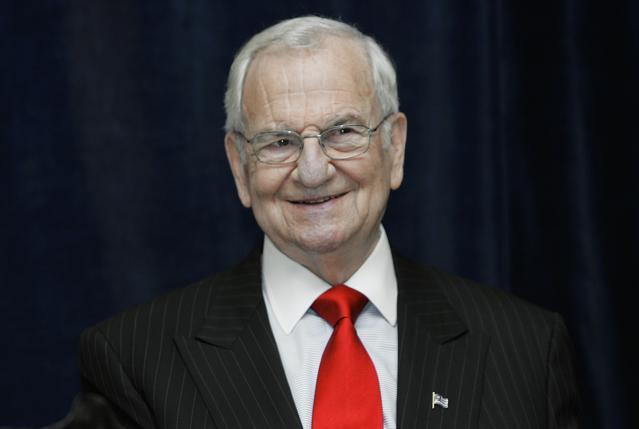
Lee Iacocca's foundation has supported basic diabetes research at Massachusetts General Hospital (Credit: AP Photo/Paul Sancya)
With continued funding from the foundation and other supporters, Faustman launched a small phase 1 clinical trial in people designed to prove that BCG would kill the bad T-cells and stimulate good T-cells in a way that would restore insulin secretion. It worked, though the positive effects were transient. So Faustman started planning a larger phase 2 study to prove that regular injections of BCG, followed by periodic booster shots, would produce a sustained response, and to determine whether that response might improve over time as the pancreas regenerates.
Still, Faustman’s team had to overcome one big hurdle before the FDA would approve the phase 2 trial: a massive shortage of BCG. Two of the biggest producers of the vaccine, Merckand Sanofi, have suffered production problems, leading to huge manufacturing delays. The issue has left some bladder cancer patients in the lurch, as reported recently in the Wall Street Journal. Faustman and her colleagues, who had been using Sanofi’s vaccine, had to go looking for an alternate supplier.
So MGH collaborated with a division of the Bill & Melinda Gates Foundation and the World Health Organization to secure the vaccine for the trial from a drug manufacturer that’s run by the Japanese government, Faustman says. “We had to get the FDA to certify that [the manufacturer's] processes are up to U.S. standards so the BCG can be used for trials,” she says. “This is not something that academics normally do, but we were determined.”
Faustman’s team has raised $19 million of the $25 million needed to complete the phase 2 study, thanks largely to the Iococca Family Foundation, which continues to be the project’s biggest source of support. “I made a promise to my late wife to find a cure for type 1 diabetes,” Iococca said in a statement. “Now my family and I look forward to the continued progress and are proud to support this effort to get closer to that goal.”
Faustman’s plan is to enroll 150 adults with diabetes, some of whom will receive BCG, with the others getting a placebo. The patients will have two injections four weeks apart and then annual injections over four years. They will continue to take insulin, though the research team will be watching closely to see if the BCG reduces the amount of insulin needed to maintain blood-sugar control, Faustman says. “We expect the metabolic effect to occur gradually over five years,” she says.
However it turns out, Faustman says, she will always be grateful to Iacocca for having the patience to continue funding the BCG research. “Many other people support us now, but the Iacocca Foundation makes a huge contribution to these trials,” she says. “He sees the big picture and is willing to look for ways to change the paradigm.”
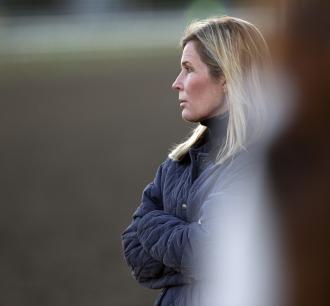
Linda Rice comes from a family of horse people who descend from her father, Clyde, who died on Monday.
OZONE PARK, N.Y. – Trainer Linda Rice was at Belmont Park on Wednesday accompanying horses back and forth from her barn to the training track.
On this chilly, overcast morning, work was probably therapeutic for Rice, whose father, Clyde, died Monday at his home in Anthony, Fla., at the age of 79.
Clyde Rice was a trainer and successful pinhooker of horses who produced a family of horse people including Linda, arguably the most successful female trainer in the sport. Rice’s brothers Wayne, Bryan, and Curt were all in the horse business. Clyde Rice’s grandchildren Kevin and Adam were trainers, and another, Brandon, was a pinhooker. Taylor, a granddaughter, was a jockey who recently married fellow rider Jose Ortiz.
“My father was a great teacher, great father, a great horseman,” Linda Rice said outside her barn Wednesday. “He had a lot of ambition, a great work ethic that he passed on to all of his children, grandchildren. They say the judge of a man is what he left behind, and he left us with a lot.
“We all owe a great debt of gratitude to my father,” Rice, unable to fight back tears, continued. “The entire family is in the horse business – my nieces, my nephews – whether they be trainers or jockeys or pinhookers or run farms. We’re all very proud of him, and we can only hope that he felt the same.”
Linda Rice said her father had suffered from diabetes for 40 years. Last Dec. 3, Clyde Rice fell and broke his hip, forcing him to miss Taylor Rice’s wedding. Clyde Rice was in the hospital through the Christmas holiday but was able to come home in recent weeks.
Linda Rice noted how her father and mother were still active, so much so that up until two years ago, they rode horses daily.
“He loved the races,” Linda Rice said. “Myself, my nephews, my brothers had horses for him for years. He and my mom, when they weren’t here, they were watching on TVG. This year, my mom and dad spent a month with me at Saratoga. That’s always precious time for me, having breakfast with them at the harness track.”
With that, Rice had to stop, compose herself, and get back to work.
On this morning, it seemed, the horses were taking care of Rice.
Rice was scheduled to return to Florida on Thursday. On Saturday, a service for Clyde Rice will be held at the Hiers-Baxley Funeral Chapel, 910 Silver Springs Blvd., Ocala, Fla., at 3 p.m. The family asks that in lieu of flowers, donations be made to the American Diabetes Association in memory of Rice.
Your message to the Bishop’s Office has been received. Although all messages are brought to the attention of Bishop Murphy, it is not possible for him to answer each message personally. Please accept the Bishop’s appreciation for writing and the assurance that he will take any suggestions or concerns into consideration. If your concern needs a personal response, please address your letter to Bishop Murphy as follows:
Most Reverend William Murphy
Diocese of Rockville Centre
PO Box 9023
Rockville Centre, NY 11571-9023
Please be assured of Bishop Murphy’s prayers for you and your loved ones.
Stop scratching on holidays Published: June 1, 2012
Off Track Betting in New York State has been racing into a crisis called shrinking revenue. Some people have spitballed a solution: Don’t close on holidays. New York State Racing Law bars racing on Christmas, Easter and Palm Sunday, and the state has ruled OTBs can’t handle action on those days, even though they could easily broadcast races from out of state. “You should be able to bet whenever you want,” said Jackson Leeds, a Nassau OTB employee who makes an occasional bet. He added some irrefutable logic: “How is the business going to make money if you’re not open to take people’s bets?” Elias Tsekerides, president of the Federation of Hellenic Societies of Greater New York, said OTB is open on Greek Orthodox Easter and Palm Sunday. “I don’t want discrimination,” Tsekerides said. “They close for the Catholics, but open for the Greek Orthodox? It’s either open for all or not open.” OTB officials have said they lose millions by closing on Palm Sunday alone, with tracks such as Gulfstream, Santa Anita, Turf Paradise and Hawthorne running. One option: OTBs could just stay open and face the consequences. New York City OTB did just that back in 2003. The handle was about $1.5 million – and OTB was fined $5,000. Easy money.
A New Bishop, With the Style of a Parish Priest, for Rockville Centre
Stop scratching on holidays Published: June 1, 2012
Off Track Betting in New York State has been racing into a crisis called shrinking revenue. Some people have spitballed a solution: Don’t close on holidays. New York State Racing Law bars racing on Christmas, Easter and Palm Sunday, and the state has ruled OTBs can’t handle action on those days, even though they could easily broadcast races from out of state. “You should be able to bet whenever you want,” said Jackson Leeds, a Nassau OTB employee who makes an occasional bet. He added some irrefutable logic: “How is the business going to make money if you’re not open to take people’s bets?” Elias Tsekerides, president of the Federation of Hellenic Societies of Greater New York, said OTB is open on Greek Orthodox Easter and Palm Sunday. “I don’t want discrimination,” Tsekerides said. “They close for the Catholics, but open for the Greek Orthodox? It’s either open for all or not open.” OTB officials have said they lose millions by closing on Palm Sunday alone, with tracks such as Gulfstream, Santa Anita, Turf Paradise and Hawthorne running. One option: OTBs could just stay open and face the consequences. New York City OTB did just that back in 2003. The handle was about $1.5 million – and OTB was fined $5,000. Easy money.