This blog is not affiliated or endorsed, by Nassau OTB, a public benefit corporation, subject to the New York Freedom
of Information Law, NY Pub Off Law Sec 84 et seq.
President Trump’s visit to a Harley-Davidson factory in Milwaukee has been canceled because the company wasn’t comfortable with protests against him planned outside its facility, according to a report.
Trump had been scheduled to visit the motorcycle manufacturer Thursday and was slated to sign more executive orders during the visit, but Harley scuttled the event, CNN reported, citing an administration source.
The visit wasn’t publicly announced, but staffers were already in the city prepping for Trump’s arrival, the network reported.
White House aide Stephanie Grisham confirmed to CNN that the president would no longer be traveling to Milwaukee.
But Harley-Davidson denied the president was slated for a visit this week, claiming, “[We] don’t have, nor did we have, a scheduled visit from the president this week at any of our facilities.”
“We are proud to have hosted presidential visits at our facilities. Three of the last five presidents — Ronald Reagan, George W. Bush and Bill Clinton — have visited us at our facilities. These visits are a testament to the pride and passion of our employees and their great work building Harley-Davidson motorcycles,” a Harley rep told CNN. “We look forward to hosting the president in the future.”
The cancellation drew sneers from Trump’s Democratic opponents.
“Donald Trump is a real tough guy when it comes to locking up a scared 5-year-old boy trying to find his mother,” Democratic National Committee senior adviser Zac Petkanas told the New York Times.
“But as soon as he has to face the American people to defend his illegal anti-Muslim ban, he chickens out. What a profile in courage,” he added.
I cover the science and business behind drug development and health
Opinions expressed by Forbes Contributors are their own.
In the late 1990s, former Chrysler CEO Lee Iacocca handed more than $10 million to Massachusetts General Hospital (MGH) scientist Denise Faustman and instructed her to transform an ancient tuberculosis vaccine into a cure for type 1 diabetes. Today Faustman announced the latest milestone in that project—FDA clearance to launch a large trial in people based on what her lab learned from that early research. And the 90-year-old auto magnate continues to fund her studies through the Iacocca Family Foundation, which he founded in 1984 in memory of his late wife, Mary, who died of complications from diabetes.
The trial, announced at the American Diabetes Associationconference in Boston, will investigate whether treating patients with the vaccine, bacillus Calmette-Guérin (BCG), will improve natural insulin production in adult patients whose pancreases still produce small but detectable levels of the hormone. If it works, BCG might one day be used to essentially reverse the disease in some patients—even adults who have suffered from diabetes from childhood—says Faustman, director of MGH’s immunobiology laboratory and the study’s principal investigator. And it wouldn’t cost much, either, since BCG has been around for nearly a century and is available in generic form.
“We’re not only going for something cheap and safe, but also trying to figure out a good treatment that might reverse the most severe form of the disease in people who are 15 or 20 years out,” Faustman says.
Here’s how BCG works: The vaccine prompts the immune system to make tumor necrosis factor (TNF), a protein that destroys the abnormal T-cells that interfere with the pancreas’s ability to make insulin. That elevation of TNF has already been well-proven to be quite therapeutic in some settings—BCG, in fact, is approved by the FDA not only to prevent tuberculosis but also to treat bladder cancer.
Faustman’s lab spent years doing basic science experiments to show TNF can temporarily eliminate the abnormal T-cells that cause type 1 diabetes. Iacocca’s foundation, which had been supporting some of that work since coming across the lab’s earliest studies, invited Faustman to present the results of her research at a board meeting in 1999, she recalls.
Iacocca asked Faustman why she wasn’t using BCG to cure diabetes in mouse models of the disease. “I said, 'It’s too early. We need to do more basic science,'” Faustman recalls. “He looked at me and said, 'You know, it’s my money.' We made a deal that if I would aggressively go forward in the mouse he would support me. He gets the credit for supporting the basic science that led to the discovery that TNF is needed in type 1 diabetes.”
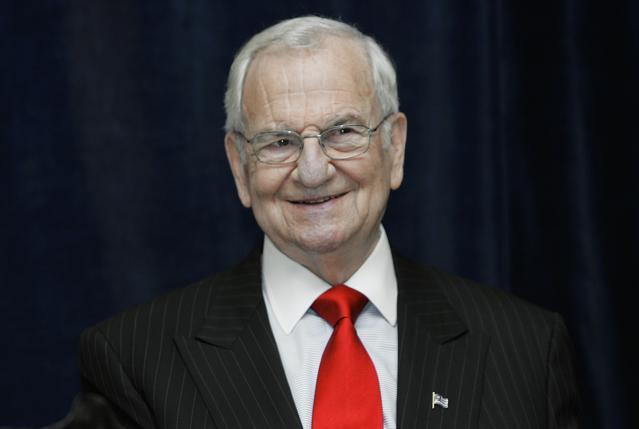
Lee Iacocca's foundation has supported basic diabetes research at Massachusetts General Hospital (Credit: AP Photo/Paul Sancya)
With continued funding from the foundation and other supporters, Faustman launched a small phase 1 clinical trial in people designed to prove that BCG would kill the bad T-cells and stimulate good T-cells in a way that would restore insulin secretion. It worked, though the positive effects were transient. So Faustman started planning a larger phase 2 study to prove that regular injections of BCG, followed by periodic booster shots, would produce a sustained response, and to determine whether that response might improve over time as the pancreas regenerates.
Still, Faustman’s team had to overcome one big hurdle before the FDA would approve the phase 2 trial: a massive shortage of BCG. Two of the biggest producers of the vaccine, Merckand Sanofi, have suffered production problems, leading to huge manufacturing delays. The issue has left some bladder cancer patients in the lurch, as reported recently in the Wall Street Journal. Faustman and her colleagues, who had been using Sanofi’s vaccine, had to go looking for an alternate supplier.
So MGH collaborated with a division of the Bill & Melinda Gates Foundation and the World Health Organization to secure the vaccine for the trial from a drug manufacturer that’s run by the Japanese government, Faustman says. “We had to get the FDA to certify that [the manufacturer's] processes are up to U.S. standards so the BCG can be used for trials,” she says. “This is not something that academics normally do, but we were determined.”
Faustman’s team has raised $19 million of the $25 million needed to complete the phase 2 study, thanks largely to the Iococca Family Foundation, which continues to be the project’s biggest source of support. “I made a promise to my late wife to find a cure for type 1 diabetes,” Iococca said in a statement. “Now my family and I look forward to the continued progress and are proud to support this effort to get closer to that goal.”
Faustman’s plan is to enroll 150 adults with diabetes, some of whom will receive BCG, with the others getting a placebo. The patients will have two injections four weeks apart and then annual injections over four years. They will continue to take insulin, though the research team will be watching closely to see if the BCG reduces the amount of insulin needed to maintain blood-sugar control, Faustman says. “We expect the metabolic effect to occur gradually over five years,” she says.
However it turns out, Faustman says, she will always be grateful to Iacocca for having the patience to continue funding the BCG research. “Many other people support us now, but the Iacocca Foundation makes a huge contribution to these trials,” she says. “He sees the big picture and is willing to look for ways to change the paradigm.”