Saturday, October 30, 2021

Global 20

 Should have invited this fellow and sent some American who did not to the strip club for … 

Perhaps his idea is sensible?

If not bet the volcano to blow! ASAP


Drilling in Yellowstone Could Save America

A plan for generating carbon-free energy and staving off a caldera explosion.

Tourists watch Old Faithful erupt at Yellowstone National Park in Wyoming, April 29.

PHOTO: KAYLA RENIE/ASSOCIATED PRESS

It’s not often that nature provides a win-win for it and humanity, but the caldera system under Yellowstone National Park is certainly one. If harnessed, it could power much of America for generations. Ignoring it means a guaranteed eruption and the destruction of a great portion of the U.S. and Canada.

In 2017 scientists at NASA’s Jet Propulsion Laboratory evaluated the caldera’s energy flows as well as the potential damage and probability of a super-volcanic eruption, which has happened at Yellowstone three times previously. The last such eruption was 631,000 years ago; the one before that was 669,000 years prior. It’s not a matter of if it’ll erupt but when. The JPL found that the devastation of such an eruption would exceed that of an asteroid 1½ miles wide crashing to Earth.

In 2014 the U.S. Geological Survey modeled the likely ash distribution from a Yellowstone super-eruption. They found that the ash radius would reach New York, with as much as 3½ inches of ash falling as far east as Lincoln, Neb. Cropland across the U.S. and Canada would be destroyed, and the release into the atmosphere of sulfate aerosols would create a global “volcanic winter” lasting generations. 

Fortunately, the JPL also points to a potential solution—horizontal drilling for geothermal energy extraction—that would siphon off excess energy, producing enough electricity to power as many as 20 million homes for a few thousand years at only 10 cents a kilowatt-hour. That’s less than Texans paid for electricity in 2019. Considering that the energy in the Yellowstone caldera is carbon-free, you have to wonder why we aren’t already doing it. 

The reason is the Geothermal Steam Act of 1970. The law was meant to spur the use of geothermal resources for energy production, but it categorically excluded national parks from development. The technology available at the time would have destroyed parks’ ecosystems. But geothermal methods have improved over the last 50 years. Horizontal drilling in particular can be used to reach energy sources miles from where a well is bored into the earth, almost completely eliminating the ground-level impact directly above geothermal WORLD

G-20 Climate Talks Threatened by Clash Over Coal Ahead of COP26

Climate negotiators worry lack of consensus could cast a shadow over the climate summit in Glasgow 

The issue of coal will be a litmus test of G-20 leaders’ political resolve.

Nassau Cty Dept of

 health says it works is safe and effective and therefore banned in Nassau county and the Nassau county medical center

Brought to you by sue without cash in New York

We have you replacement ready to take your place


South Africa BCG booster trials seek low-cost weapon against COVID-19

Wendell Roelf
  •  

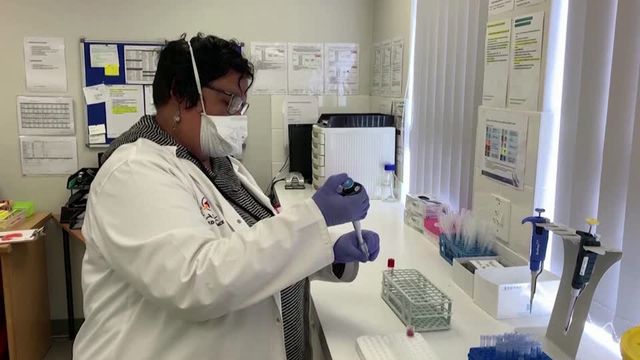
CAPE TOWN (Reuters) - The idea of testing the BCG vaccine in Africa against COVID-19 was bound to cause controversy, yet officials say efforts underway could, if successful, give the continent a cheap and easily deployable weapon against the virus.

South African biotech group TASK this month started the continent's first trial to see whether 250 high-risk workers given a booster dose of BCG vaccine show better protection against COVID-19 than the same number given a placebo.

Three thousand health workers are eventually expected to be involved in the trial overall. Researchers expect preliminary results within six months in the year-long trial.

ADVERTISEMENT

Tests to see if the century-old Bacille Calmette-Guerin (BCG) vaccine, widely used in Africa for tuberculosis, protects against the new coronavirus have also begun in the Netherlands and Australia.

But unlike those countries, where BCG vaccinations at birth aren't the norm, South Africa's trial involves injecting people for a second time. BCG injections are mandatory at birth in South Africa, where TB is a leading killer.

"We are trying to see if ... reminding the immune system of that vaccine will make a difference," said Andreas Diacon, a professor at Stellenbosch University's medical school who founded TASK in 2005 to hunt for novelty medicines and vaccines.

"Perhaps it works, perhaps it doesn't, but it's definitely worth trying ... (because) we just need to know if it can help us through this COVID-19 crisis," he told Reuters at TASK's high-security mycobacteriology laboratory.

Trying out a new medical intervention in Africa always rings alarm bells because of an unfortunate history of big pharmaceutical companies using Africans as guinea pigs.

So when a French doctor last month suggested that the BCG should also be tested in Africa as a possible shield against COVID-19, it provoked a predictable social media backlash.

ADVERTISEMENT

Yet the vaccine is widely regarded as safe, and officials involved in the trial at Tygerberg hospital in Cape Town point out that it is so readily available in Africa and the developing world that poor countries with limited health resources could benefit massively from the discovery that the jab is effective.


South Africa BCG booster trials seek low-cost weapon against COVID-19

Wendell Roelf
  •  

CAPE TOWN (Reuters) - The idea of testing the BCG vaccine in Africa against COVID-19 was bound to cause controversy, yet officials say efforts underway could, if successful, give the continent a cheap and easily deployable weapon against the virus.

South African biotech group TASK this month started the continent's first trial to see whether 250 high-risk workers given a booster dose of BCG vaccine show better protection against COVID-19 than the same number given a placebo.

Three thousand health workers are eventually expected to be involved in the trial overall. Researchers expect preliminary results within six months in the year-long trial.

ADVERTISEMENT

Tests to see if the century-old Bacille Calmette-Guerin (BCG) vaccine, widely used in Africa for tuberculosis, protects against the new coronavirus have also begun in the Netherlands and Australia.

But unlike those countries, where BCG vaccinations at birth aren't the norm, South Africa's trial involves injecting people for a second time. BCG injections are mandatory at birth in South Africa, where TB is a leading killer.

"We are trying to see if ... reminding the immune system of that vaccine will make a difference," said Andreas Diacon, a professor at Stellenbosch University's medical school who founded TASK in 2005 to hunt for novelty medicines and vaccines.

"Perhaps it works, perhaps it doesn't, but it's definitely worth trying ... (because) we just need to know if it can help us through this COVID-19 crisis," he told Reuters at TASK's high-security mycobacteriology laboratory.

Trying out a new medical intervention in Africa always rings alarm bells because of an unfortunate history of big pharmaceutical companies using Africans as guinea pigs.

So when a French doctor last month suggested that the BCG should also be tested in Africa as a possible shield against COVID-19, it provoked a predictable social media backlash.

ADVERTISEMENT

Yet the vaccine is widely regarded as safe, and officials involved in the trial at Tygerberg hospital in Cape Town point out that it is so readily available in Africa and the developing world that poor countries with limited health resources could benefit massively from the discovery that the jab is effective.