by giving metformin to their fellow bettors who are sick and being ....by "modern medicine". OTB parlors are hubs of social activity and gambling and are decidedly more functional than the US Congress. Shoot BCG or gobble metformin as needed for fun, health and/or profit. Reading the Racing Form gives exercise to the minds which process ideas unlike union leaders, politicians, and many others. So simple even a caveman can do it without any need for an MD, PhD or the like.
GEN ExclusivesMore »Can the U.K. Maintain Its Biomanufacturing
Empire? A New Cell Therapy Stock Watch: The Fabulous Baker Brothers
Metabolism’s Unexpected Role in Cancer The 10 Biggest Events of 2013
Cancer Stem Cells: Making Sense of the Data
GEN ExclusivesMore »
Dec 26, 2013
Metabolism’s Unexpected Role in Cancer
A geneticist at the Salk Institute discusses his incredible discoveries.
Mitzi Perdue
The
discoveries made in Reuben Shaw’s lab could influence how we treat
diabetes, Alzheimer’s, and even aging itself. [© sheelamohanachandran -
Fotolia.com]
The relationship between metabolism, cancer, and
genetics was for decades obscured in part by chance,
but in the last decade, the relationship has been rediscovered, also at
least in part by chance. Reuben Shaw, Ph.D., a geneticist and
researcher at the Salk Institute, is at the center of this story, and
interestingly, the discoveries made in his lab have not only resulted in
new targets for cancer therapy, but longer term, they’re also likely to
influence how we treat diabetes, Alzheimer’s, and even aging itself.
Lost Information
To
begin with the chance part of the story, what we now know to be
true—that metabolism influences cancer—was well known at least 90 years
ago. Back then, Otto Heinrich Warburg, a German physiologist, observed
that tumor cells utilize glycolysis more than their normal counterpart
cells despite being in normal oxygen conditions (the “Warburg Effect”).
In 1931, Warburg won a Nobel Prize for his work on mitochondria.
Subsequently he formulated the Warburg Hypothesis, that the cause of
cancer is defective
mitochondria.
In the 1980s, however, the discovery of
“oncogenes” that directly caused cancer led researchers to believe that
the Warburg Hypothesis for cancer causation was simply wrong. As the
data on cancer-causing genes became both more comprehensive and more
productive, cancer research switched to decoding genes, and a generation
of researchers began ignoring metabolism as a factor.
Chance Intervenes
Things
changed, however, when Dr. Shaw, who was trained as a cancer researcher
at MIT and Harvard Medical School, was accepted at the Molecular and
Cell Biology Laboratory at the Salk Institute. As Dr. Shaw puts it,
“Salk is the only place that has a strong and deep history of cancer and
diabetes research that also has the laboratories for both housed in one
building. This means that some of the top people in the country get to
interact fluidly, including not only sharing knowledge but also their
tools and
equipment.”
From Dr. Shaw’s point of view, the location of both
the cancer and diabetes researchers in the same building meant that he
was benefiting on a daily basis from the unique tools and discoveries of
both the cancer and diabetes researchers at Salk and the
cross-fertilization of these two fields. He was therefore able to pursue
his investigations of the connections between the two diseases in ways
that might not have happened if he were in a silo-type building where
all his colleagues were researching cancer alone or diabetes alone.
The Cancer-Diabetes Connection
Before
coming to Salk, he was already interested in a possible connection
between the two diseases. As a postdoctoral fellow at the Harvard
Medical School, he made the unexpected discovery in 2003 that LKB1, a
gene causing 30% of lung cancers and 25% of cervical cancers was
directly activating the enzyme AMPK, known to modulate diabetes and
metabolism.
At this point, Dr. Shaw asked himself two seminal
questions: “What did a diabetes gene have to do with cancer? And did the
cancer gene have anything to do with diabetes?”
The answer
turned out to be revelatory. AMPK is an ancient metabolic checkpoint
that senses energy deprivation in the cells. Early in evolution, cells
needed a sensor regulating their need for energy, and AMPK is found in
organisms from simple yeasts to man and everything in between. AMPK
responds to caloric restriction, exercise, hypoxia, low glucose, and
metabolic hormones such as ghrelin or adiponectin.
In 2005, Dr.
Shaw and his lab showed that metformin operates through LKB1 and AMPK to
lower blood glucose. Since it is well-tolerated, it is the frontline
treatment for type 2 diabetes with more than 120 million people taking
it every day. However, as Dr. Shaw had postulated, at this time it was
also becoming known that metformin reduces the
risk of cancer in diabetic patients.
In 2008, now at Salk, Dr.
Shaw and his lab discovered that AMPK directly shuts off a major
oncogene called TOR, but it only does so when nutrients are low. This
oncogene is the causal biochemical event in a number of human cancers,
including kidney cancer, tuberous sclerosis, and LAM.
“LKB1 and
AMPK act as a fuel gauge in our cells,” he explained in a recent
interview, “and when energy is low, they instruct the cells to slow
their metabolism. When tumor cells lack LKB1 or other parts of its
pathway, they have, in effect, lost the sensor to know if their fuel
levels are low.”
Interfering with Cancer’s Sweet Tooth
Knowing
that cells lacking LKB1 had lost their fuel gauges, Dr. Shaw wondered
if this could be an entry point for disrupting tumor growth. Dr. Shaw
already knew that factors such as exercise and calorie restriction could
stimulate AMPK’s signaling ability, but were
there, he wondered, drugs that could accomplish the same thing?
Interestingly, the answer is yes.
The drugs metformin and
phenformin both inhibit mitochondria; however, phenformin is nearly 50
times as potent as metformin. Dr. Shaw and his postdoctoral fellows
tested both metformin and phenformin as chemotherapeutic agents in mice
genetically engineered to mutate different cancer genes in adult lung
cells, which results in the mice developing advanced-stage lung tumors.
Only in mice lacking the LKB1 cancer gene did Dr. Shaw and his team
observe that, after three weeks of treatment with phenformin, there was a
major reduction in tumor burden in the mice.
Cancer’s Achilles’ Heel
Knowledge
of this leads to a profound impact on therapies for cancer because, as
Dr. Shaw now knew, it was possible to interfere pharmacologically with
this pathway. Disruptions of the “fuel sensing” mechanism means that
with cancer cells, they could
cause nutrient and oxygen deprivation. This had the medically important
effect of signaling AMPK to arrest cell growth. The cancer cells would
be influenced to cease proliferating.
But that’s not the end. The
other side of the coin of being able to induce a faulty fuel-sensing
mechanism is that the cancer cells may act as if it they have all the
energy and nutrients they need, even when they don’t. This results in
the continuation of cell growth, and in the absence of fuel, the cells
continue dividing until they run out of all energy stores and die.
Possible Clinical Trials
“These
studies,” he said, “are the tip of the iceberg. We are in the midst of
decoding new links between metabolism and cancer that are going to
result in new druggable targets. They are likely to be important in
treating many different cancers, and they may also be effective for
other diseases such as type II diabetes. In the future we may find that
aberrations in these same pathways and the metabolic disturbances that
result may underpin neurodegenerative diseases and other broad disease
categories as well.”
A lot is at stake. The 90-year-old Warburg
Hypothesis, re-evaluated by Dr. Shaw and his colleagues, could have an
outsize impact on modern medicine. Let the clinical trials begin!
Sunday, December 29, 2013

metformin
Google+
GEN ExclusivesMore »Can the U.K. Maintain Its Biomanufacturing Empire? A New Cell Therapy Stock Watch: The Fabulous Baker Brothers Metabolism’s Unexpected Role in Cancer The 10 Biggest Events of 2013 Cancer Stem Cells: Making Sense of the Data
GEN ExclusivesMore »
Dec 26, 2013
Metabolism’s Unexpected Role in Cancer
A geneticist at the Salk Institute discusses his incredible discoveries.
Mitzi Perdue
The discoveries made in Reuben Shaw’s lab could influence how we treat diabetes, Alzheimer’s, and even aging itself. [© sheelamohanachandran - Fotolia.com]
The relationship between metabolism, cancer, and genetics was for decades obscured in part by chance, but in the last decade, the relationship has been rediscovered, also at least in part by chance. Reuben Shaw, Ph.D., a geneticist and researcher at the Salk Institute, is at the center of this story, and interestingly, the discoveries made in his lab have not only resulted in new targets for cancer therapy, but longer term, they’re also likely to influence how we treat diabetes, Alzheimer’s, and even aging itself.
Lost Information
To begin with the chance part of the story, what we now know to be true—that metabolism influences cancer—was well known at least 90 years ago. Back then, Otto Heinrich Warburg, a German physiologist, observed that tumor cells utilize glycolysis more than their normal counterpart cells despite being in normal oxygen conditions (the “Warburg Effect”). In 1931, Warburg won a Nobel Prize for his work on mitochondria. Subsequently he formulated the Warburg Hypothesis, that the cause of cancer is defective mitochondria.
In the 1980s, however, the discovery of “oncogenes” that directly caused cancer led researchers to believe that the Warburg Hypothesis for cancer causation was simply wrong. As the data on cancer-causing genes became both more comprehensive and more productive, cancer research switched to decoding genes, and a generation of researchers began ignoring metabolism as a factor.
Chance Intervenes
Things changed, however, when Dr. Shaw, who was trained as a cancer researcher at MIT and Harvard Medical School, was accepted at the Molecular and Cell Biology Laboratory at the Salk Institute. As Dr. Shaw puts it, “Salk is the only place that has a strong and deep history of cancer and diabetes research that also has the laboratories for both housed in one building. This means that some of the top people in the country get to interact fluidly, including not only sharing knowledge but also their tools and equipment.”
From Dr. Shaw’s point of view, the location of both the cancer and diabetes researchers in the same building meant that he was benefiting on a daily basis from the unique tools and discoveries of both the cancer and diabetes researchers at Salk and the cross-fertilization of these two fields. He was therefore able to pursue his investigations of the connections between the two diseases in ways that might not have happened if he were in a silo-type building where all his colleagues were researching cancer alone or diabetes alone.
The Cancer-Diabetes Connection
Before coming to Salk, he was already interested in a possible connection between the two diseases. As a postdoctoral fellow at the Harvard Medical School, he made the unexpected discovery in 2003 that LKB1, a gene causing 30% of lung cancers and 25% of cervical cancers was directly activating the enzyme AMPK, known to modulate diabetes and metabolism.
At this point, Dr. Shaw asked himself two seminal questions: “What did a diabetes gene have to do with cancer? And did the cancer gene have anything to do with diabetes?”
The answer turned out to be revelatory. AMPK is an ancient metabolic checkpoint that senses energy deprivation in the cells. Early in evolution, cells needed a sensor regulating their need for energy, and AMPK is found in organisms from simple yeasts to man and everything in between. AMPK responds to caloric restriction, exercise, hypoxia, low glucose, and metabolic hormones such as ghrelin or adiponectin.
In 2005, Dr. Shaw and his lab showed that metformin operates through LKB1 and AMPK to lower blood glucose. Since it is well-tolerated, it is the frontline treatment for type 2 diabetes with more than 120 million people taking it every day. However, as Dr. Shaw had postulated, at this time it was also becoming known that metformin reduces the risk of cancer in diabetic patients.
In 2008, now at Salk, Dr. Shaw and his lab discovered that AMPK directly shuts off a major oncogene called TOR, but it only does so when nutrients are low. This oncogene is the causal biochemical event in a number of human cancers, including kidney cancer, tuberous sclerosis, and LAM.
“LKB1 and AMPK act as a fuel gauge in our cells,” he explained in a recent interview, “and when energy is low, they instruct the cells to slow their metabolism. When tumor cells lack LKB1 or other parts of its pathway, they have, in effect, lost the sensor to know if their fuel levels are low.”
Interfering with Cancer’s Sweet Tooth
Knowing that cells lacking LKB1 had lost their fuel gauges, Dr. Shaw wondered if this could be an entry point for disrupting tumor growth. Dr. Shaw already knew that factors such as exercise and calorie restriction could stimulate AMPK’s signaling ability, but were there, he wondered, drugs that could accomplish the same thing? Interestingly, the answer is yes.
The drugs metformin and phenformin both inhibit mitochondria; however, phenformin is nearly 50 times as potent as metformin. Dr. Shaw and his postdoctoral fellows tested both metformin and phenformin as chemotherapeutic agents in mice genetically engineered to mutate different cancer genes in adult lung cells, which results in the mice developing advanced-stage lung tumors. Only in mice lacking the LKB1 cancer gene did Dr. Shaw and his team observe that, after three weeks of treatment with phenformin, there was a major reduction in tumor burden in the mice.
Cancer’s Achilles’ Heel
Knowledge of this leads to a profound impact on therapies for cancer because, as Dr. Shaw now knew, it was possible to interfere pharmacologically with this pathway. Disruptions of the “fuel sensing” mechanism means that with cancer cells, they could cause nutrient and oxygen deprivation. This had the medically important effect of signaling AMPK to arrest cell growth. The cancer cells would be influenced to cease proliferating.
But that’s not the end. The other side of the coin of being able to induce a faulty fuel-sensing mechanism is that the cancer cells may act as if it they have all the energy and nutrients they need, even when they don’t. This results in the continuation of cell growth, and in the absence of fuel, the cells continue dividing until they run out of all energy stores and die.
Possible Clinical Trials
“These studies,” he said, “are the tip of the iceberg. We are in the midst of decoding new links between metabolism and cancer that are going to result in new druggable targets. They are likely to be important in treating many different cancers, and they may also be effective for other diseases such as type II diabetes. In the future we may find that aberrations in these same pathways and the metabolic disturbances that result may underpin neurodegenerative diseases and other broad disease categories as well.”
A lot is at stake. The 90-year-old Warburg Hypothesis, re-evaluated by Dr. Shaw and his colleagues, could have an outsize impact on modern medicine. Let the clinical trials begin!
December 31, on the way to the party or
perhaps it is the party or the end of more than the year is upon us
Events
Friday, December 27, 2013
Welcome to Spain?
| « Back to Article |
NYRA's CEO had $75,000 'mentor'
Records fuel questions about agency's ties with search firm
By James M. Odato
Updated 6:25 am, Monday, November 4, 2013
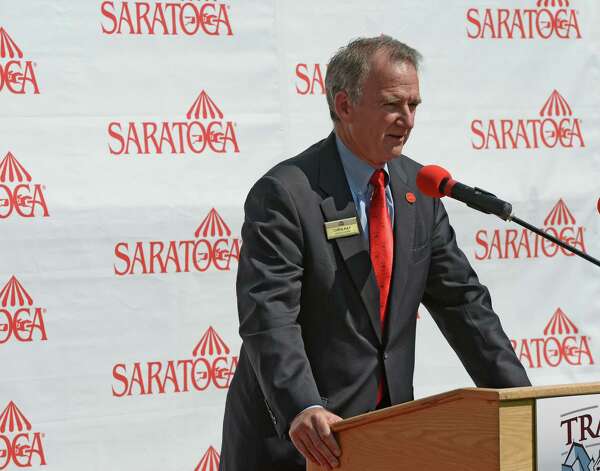 Christopher Kay speaks about the Travers Stakes in the paddock of the Saratoga Race Course Aug 21, 2013 in Saratoga Springs, N.Y. during the post position draw in which Verrazano was named the morning line favorite to win the Travers Stakes which will run on Saturday at Saratoga. (Skip Dickstein/Times Union)

 Printable Version
 Email This
 Font
Font
Page 1 of 1
The New York Racing Association paid a search firm $130,060 to come up with the winning candidate for chief executive officer. Once NYRA's board acted on that recommendation and hired Christopher Kay, the payments didn't stop.
According to people familiar with the arrangement NYRA made with RSR Partners, a managing partner with the headhunting firm that found Kay was retained for another $75,000 to "mentor" the new CEO about the world of sports management.
Kay bonded with the adviser, lawyer John Keitt, to the point that Kay came very close to hiring him as NYRA's next chief counsel. But once the Cuomo administration learned of the plan, state officials raised concerns about the optics and suggested that Chairman David Skorton unwind the proposal. Keitt backed out while this push and pull was going on, according to a person familiar with the situation.
Keitt, a former top lawyer for the Associated Press, did not take calls from a reporter. His colleague at RSR, Joseph Bailey, said the firm never talks about its relationships with clients. NYRA spokesman Eric Wing also would not talk about the matter.
NYRA partially granted a Freedom of Information Law request for information about RSR's fees and reports. The limited information provided shows that the Greenwich, Conn.-based RSR received three payments in April and May for its search work, plus some expenses. Not included in the documents provided under FOIL was any mention of the additional deal with Keitt for his mentoring services — a type of consulting known as "onboarding."
The concern within NYRA is that the Cuomo administration will try to force a lawyer it prefers on the now publicly controlled racing operation, which holds the keys to the state's three principal thoroughbred tracks, according to a person familiar with the situation.
Kay, who comes from a corporate law background, is unfamiliar with racing businesses but was hired for his broader experience in corporate and not-for-profit operations. In mid-October, he abruptly dismissed Kenneth V. Handal, NYRA's chief counsel; NYRA officials have not said who would assume the responsibilities of the top legal executive. Wing would not say what the process for filling the position will be.
NYRA this month also hired an executive in charge of racing, Martin Panza. The appointment comes four months after Kay took the top job at a salary of $300,000. He can earn another $250,000 in bonus money for meeting accomplishments that have not been revealed.
Lottery seeks advice
On Sept. 13, the Division of the Lottery notified prospective bidders that it desires proposals for "market research regarding alternative approaches for the future of lottery in New York state." The ad for the request said a bidder may be picked as soon as Oct. 23. The notice said the study sought needed to take into consideration the pending referendum on casinos.
The study is sought without knowing the outcome of Tuesday's vote on whether the public supports changing the state constitution to allow for commercial casinos.
Lottery spokesman Lee Park said staff considered this the right time since the landscape of gaming will change. Indeed, even if the casino referendum fails, the state plans to allow up to six more video lottery terminal centers to be added to the nine racinos already operating. Lottery officials say VLTs compete for gambling dollars and have taken away from traditional Lottery revenues.
The request to bidders says the report desired must be delivered 45 days after Election Day.
"It is believed that the state does not fully capitalize on the economic development of legalized gambling," the notice to bidders says. The contractor is expected to be chosen soon, said Park, adding that the Lottery could extend deadlines.
The ad says a five-year plan is sought and that online gambling options are in question, although a marketing strategy for such alternatives is not specifically required. The division also said that if the bidders want to weigh in on developing problem gambling programs, they must indicate the costs of any recommendations.
Several states are looking at options for their Lottery products, with some weighing whether to offer a hand-held computer-access option.
Do you have a story about waste and abuse of public funds? Contact James M. Odato at518-454-5083, jodato@timesunion.com or on Twitter at @JamesMOdato
According to people familiar with the arrangement NYRA made with RSR Partners, a managing partner with the headhunting firm that found Kay was retained for another $75,000 to "mentor" the new CEO about the world of sports management.
Kay bonded with the adviser, lawyer John Keitt, to the point that Kay came very close to hiring him as NYRA's next chief counsel. But once the Cuomo administration learned of the plan, state officials raised concerns about the optics and suggested that Chairman David Skorton unwind the proposal. Keitt backed out while this push and pull was going on, according to a person familiar with the situation.
Keitt, a former top lawyer for the Associated Press, did not take calls from a reporter. His colleague at RSR, Joseph Bailey, said the firm never talks about its relationships with clients. NYRA spokesman Eric Wing also would not talk about the matter.
NYRA partially granted a Freedom of Information Law request for information about RSR's fees and reports. The limited information provided shows that the Greenwich, Conn.-based RSR received three payments in April and May for its search work, plus some expenses. Not included in the documents provided under FOIL was any mention of the additional deal with Keitt for his mentoring services — a type of consulting known as "onboarding."
The concern within NYRA is that the Cuomo administration will try to force a lawyer it prefers on the now publicly controlled racing operation, which holds the keys to the state's three principal thoroughbred tracks, according to a person familiar with the situation.
Kay, who comes from a corporate law background, is unfamiliar with racing businesses but was hired for his broader experience in corporate and not-for-profit operations. In mid-October, he abruptly dismissed Kenneth V. Handal, NYRA's chief counsel; NYRA officials have not said who would assume the responsibilities of the top legal executive. Wing would not say what the process for filling the position will be.
NYRA this month also hired an executive in charge of racing, Martin Panza. The appointment comes four months after Kay took the top job at a salary of $300,000. He can earn another $250,000 in bonus money for meeting accomplishments that have not been revealed.
Lottery seeks advice
On Sept. 13, the Division of the Lottery notified prospective bidders that it desires proposals for "market research regarding alternative approaches for the future of lottery in New York state." The ad for the request said a bidder may be picked as soon as Oct. 23. The notice said the study sought needed to take into consideration the pending referendum on casinos.
The study is sought without knowing the outcome of Tuesday's vote on whether the public supports changing the state constitution to allow for commercial casinos.
Lottery spokesman Lee Park said staff considered this the right time since the landscape of gaming will change. Indeed, even if the casino referendum fails, the state plans to allow up to six more video lottery terminal centers to be added to the nine racinos already operating. Lottery officials say VLTs compete for gambling dollars and have taken away from traditional Lottery revenues.
The request to bidders says the report desired must be delivered 45 days after Election Day.
"It is believed that the state does not fully capitalize on the economic development of legalized gambling," the notice to bidders says. The contractor is expected to be chosen soon, said Park, adding that the Lottery could extend deadlines.
The ad says a five-year plan is sought and that online gambling options are in question, although a marketing strategy for such alternatives is not specifically required. The division also said that if the bidders want to weigh in on developing problem gambling programs, they must indicate the costs of any recommendations.
Several states are looking at options for their Lottery products, with some weighing whether to offer a hand-held computer-access option.
Do you have a story about waste and abuse of public funds? Contact James M. Odato at518-454-5083, jodato@timesunion.com or on Twitter at @JamesMOdato
Do you have a story about waste and abuse of public funds? Contact James M. Odato at518-454-5083, jodato@timesunion.com or on Twitter at @JamesMOdato
Tuesday 10 am fllight arriving from Spain
| ||||||||
| ||||||||
“All of Spain’s representative institutions are under pressure, because what the crisis has done is bring to the surface a lot of practices that might have been tolerated before, but now no longer,” Mr. Miño Reig said.
“All of Spain’s representative institutions are under pressure, because what the crisis has done is bring to the surface a lot of practices that might have been tolerated before, but now no longer,” Mr. Miño Reig said.
Subscribe to:
Posts (Atom)